Best ESP32 for Home Assistant: C6 for Most, S3 for Power
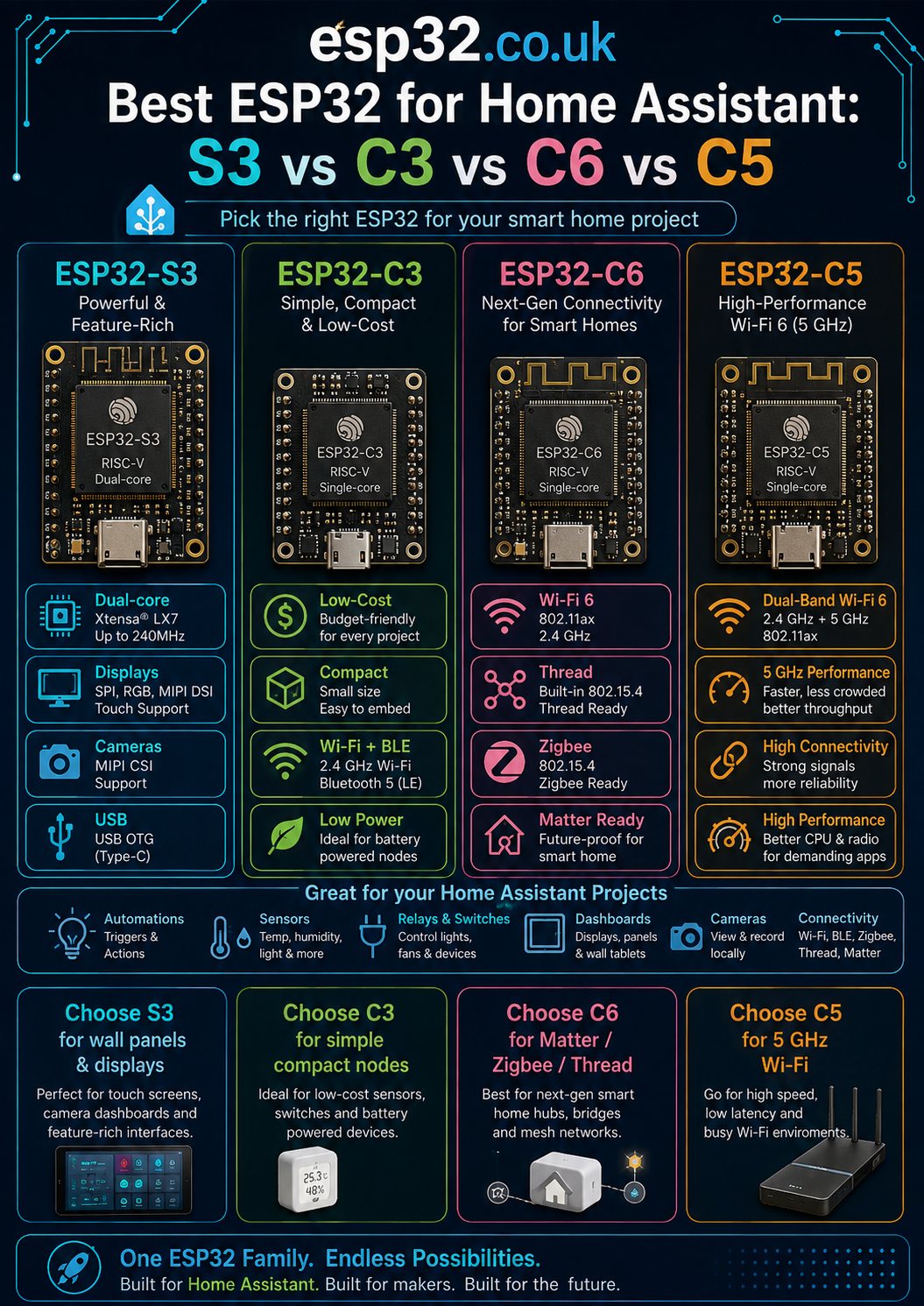
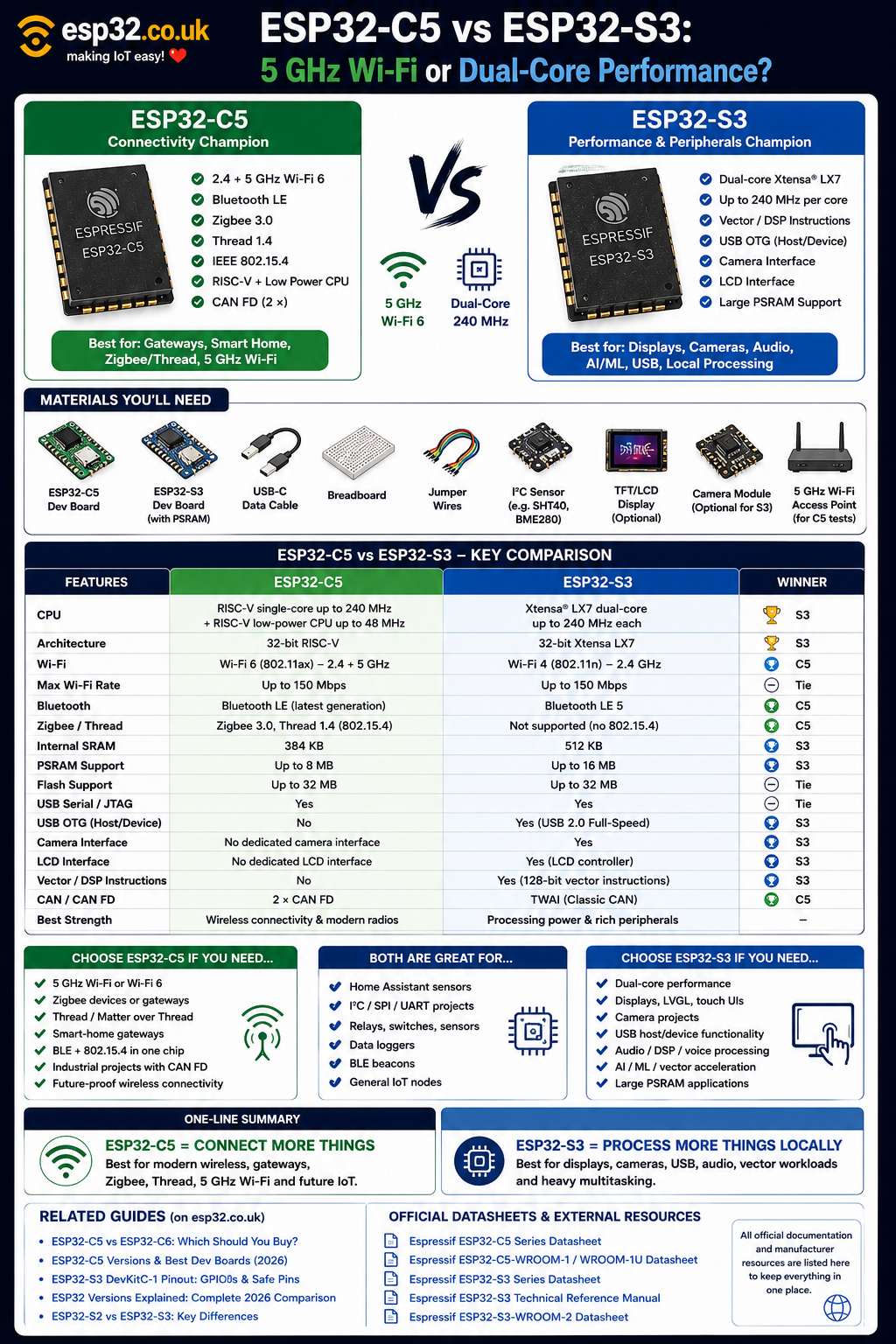
Best ESP32 for Home Assistant and ESPHome: choose C6 for most smart-home nodes, S3 for BLE/voice/display projects, C3 for budget and C5 for 5 GHz.
Best ESP32 for Home Assistant and ESPHome: choose C6 for most smart-home nodes, S3 for BLE/voice/display projects, C3 for budget and C5 for 5 GHz.
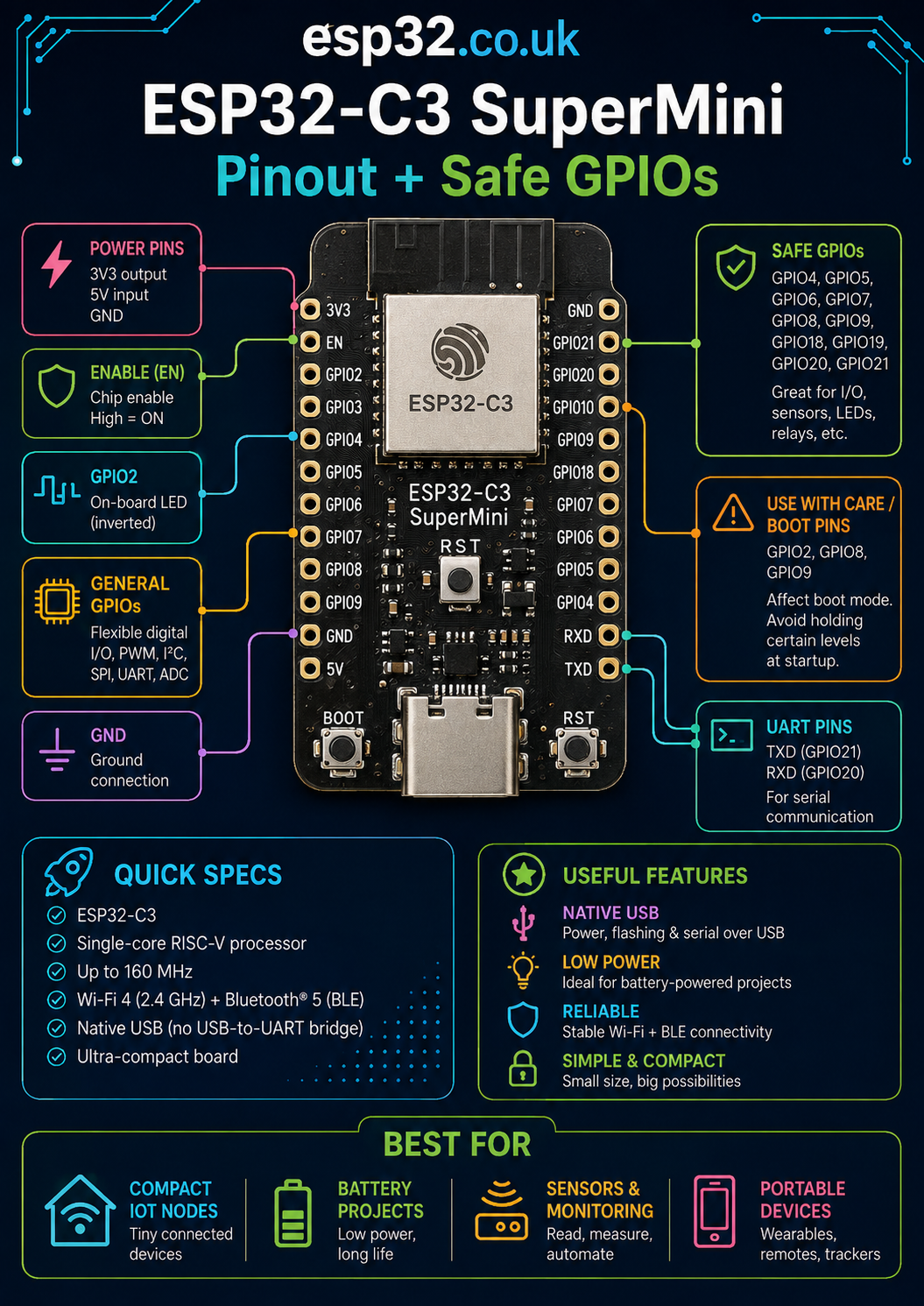
Quick Summary (TL;DR):The ESP32-C3 SuperMini is a tiny third-party ESP32-C3 board built around a 160 MHz single-core RISC-V processor with 2.4 GHz Wi-Fi, Bluetooth LE, native USB and usually 4 MB flash. On the common 16-pin layout, the easiest GPIOs…
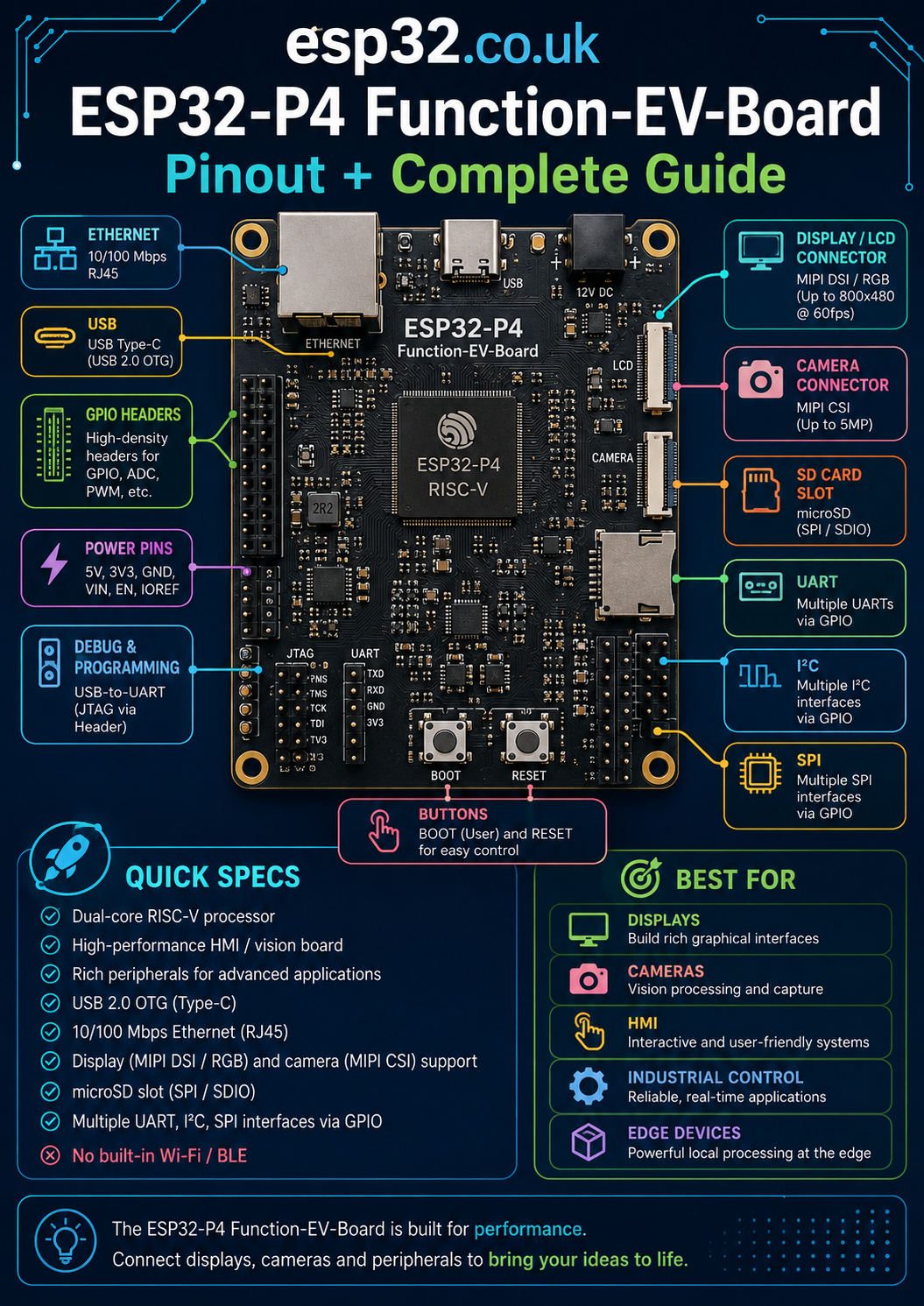
Quick Summary (TL;DR): The ESP32-P4 Function-EV-Board v1.5.2 is not a normal ESP32 DevKit. It is a high-performance multimedia development platform built around the dual-core 400 MHz ESP32-P4 RISC-V processor, with 16 MB flash, 32 MB PSRAM, MIPI CSI camera, MIPI…
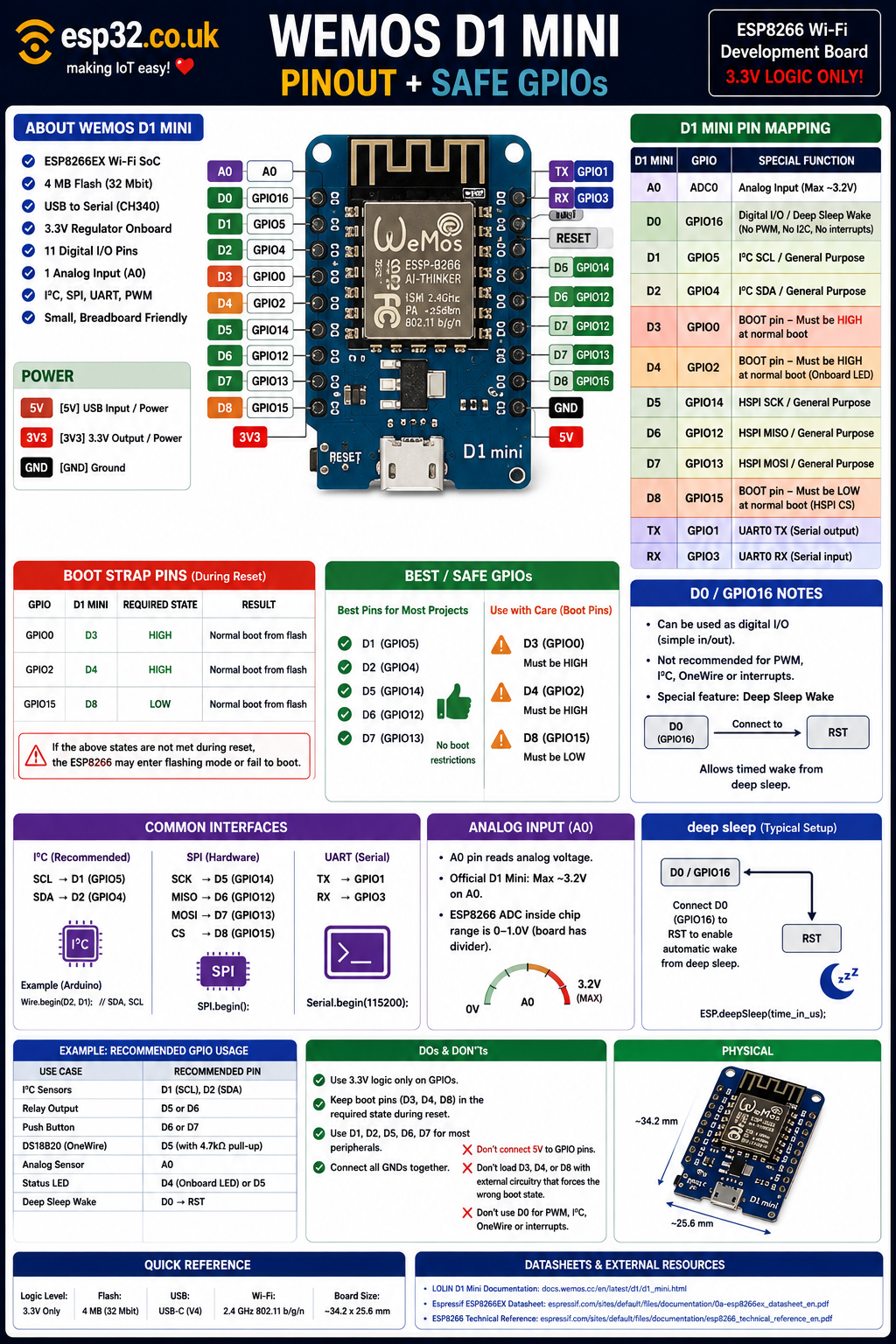
The Wemos/LOLIN D1 Mini is one of the easiest ESP8266 boards to use because it combines a 4 MB ESP8266 module, USB programming, 3.3 V regulation and breadboard-friendly headers in a very small board. For most projects, the best GPIOs…
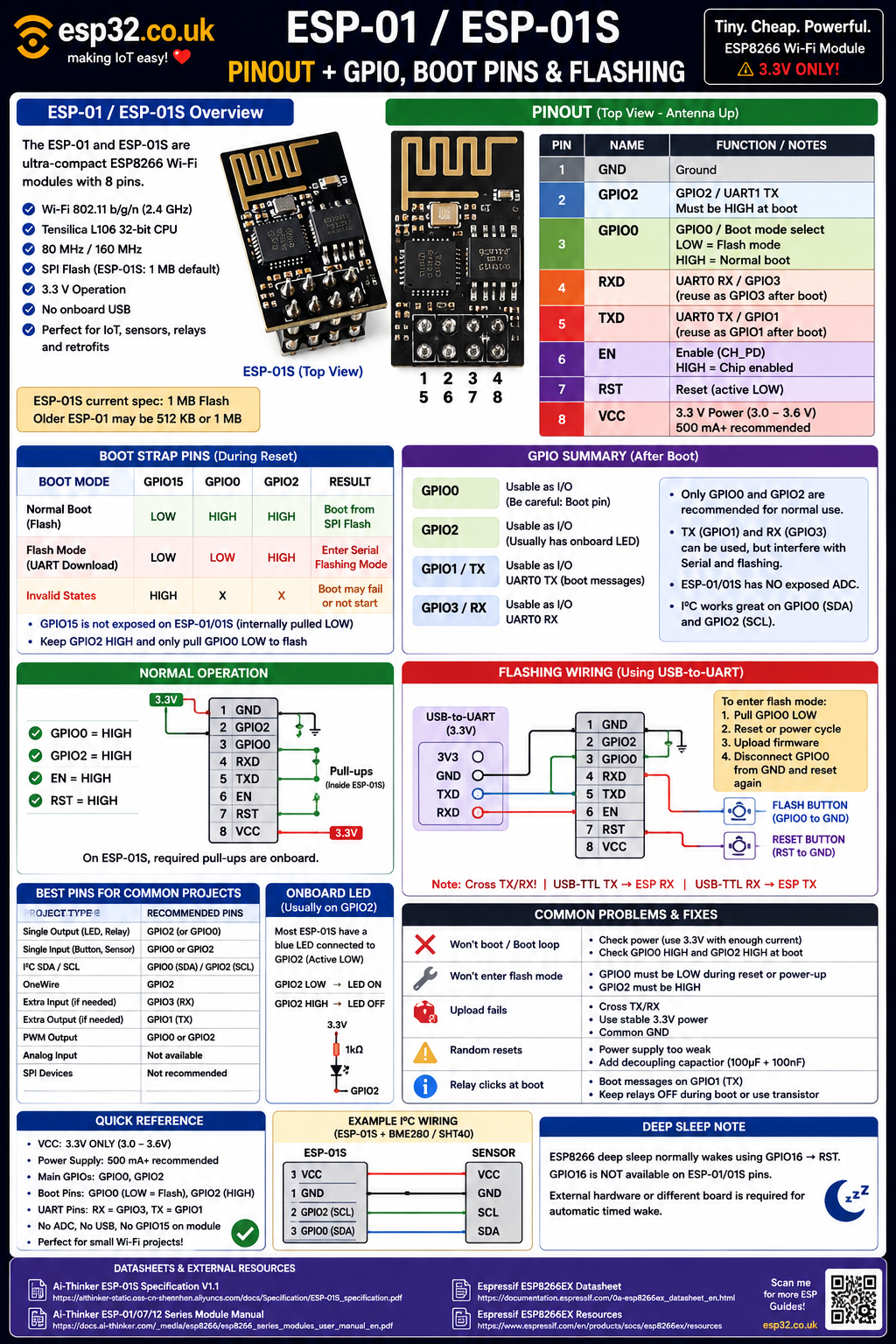
The ESP-01 and ESP-01S are tiny ESP8266 Wi-Fi modules with only eight pins, but they can run complete Arduino, MQTT and simple ESPHome projects without another microcontroller. The two easiest user GPIOs are GPIO0 and GPIO2, although both are also…
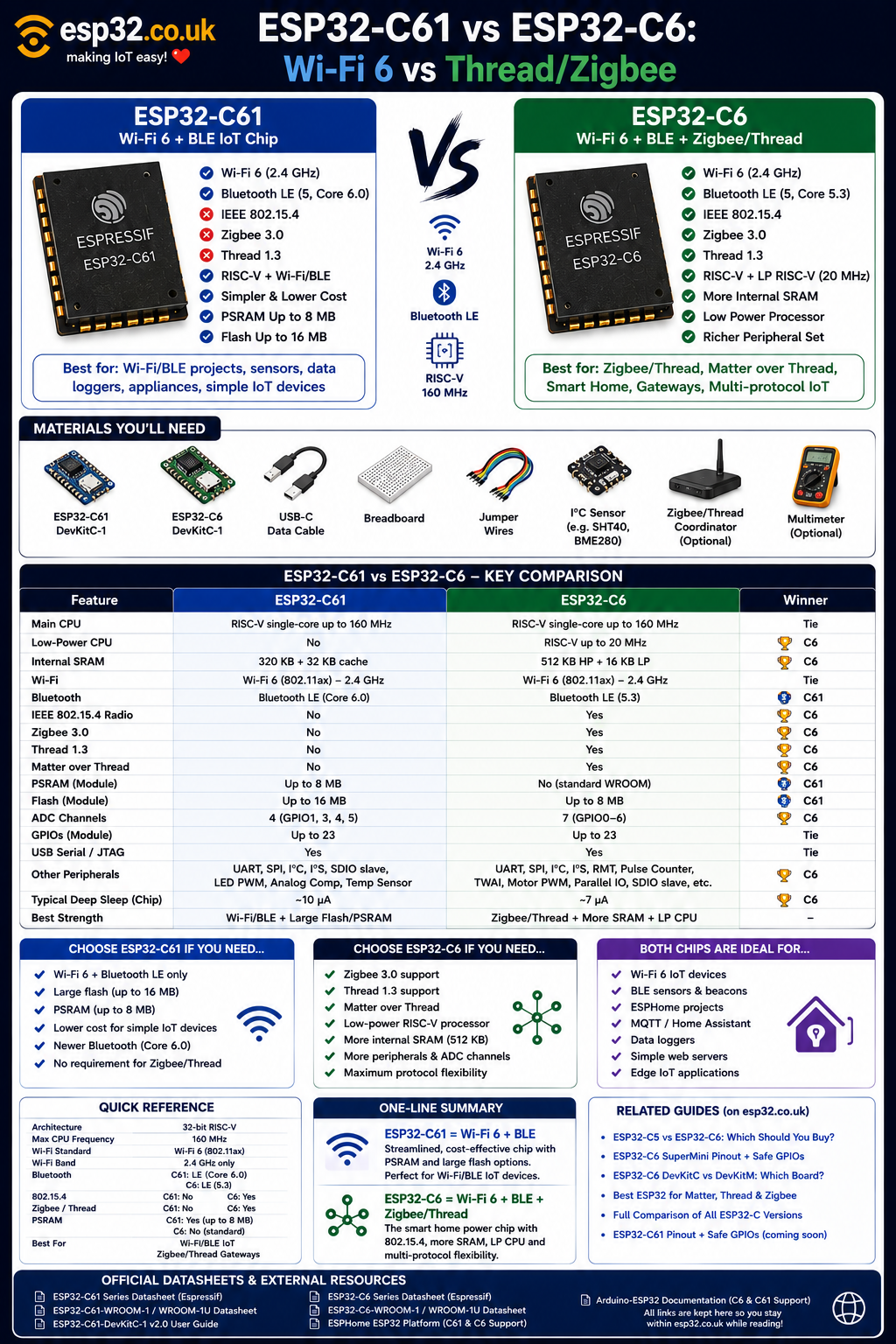
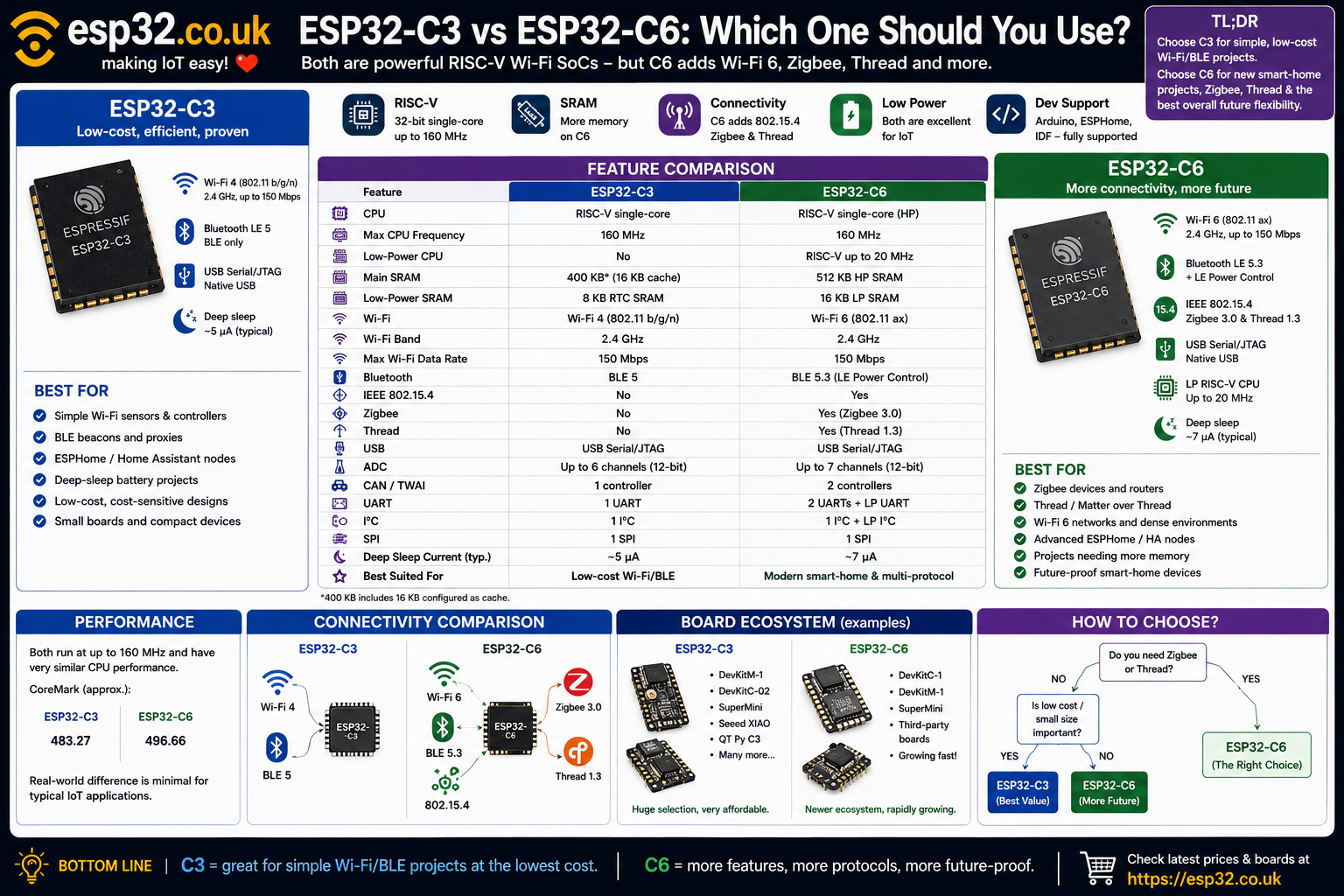
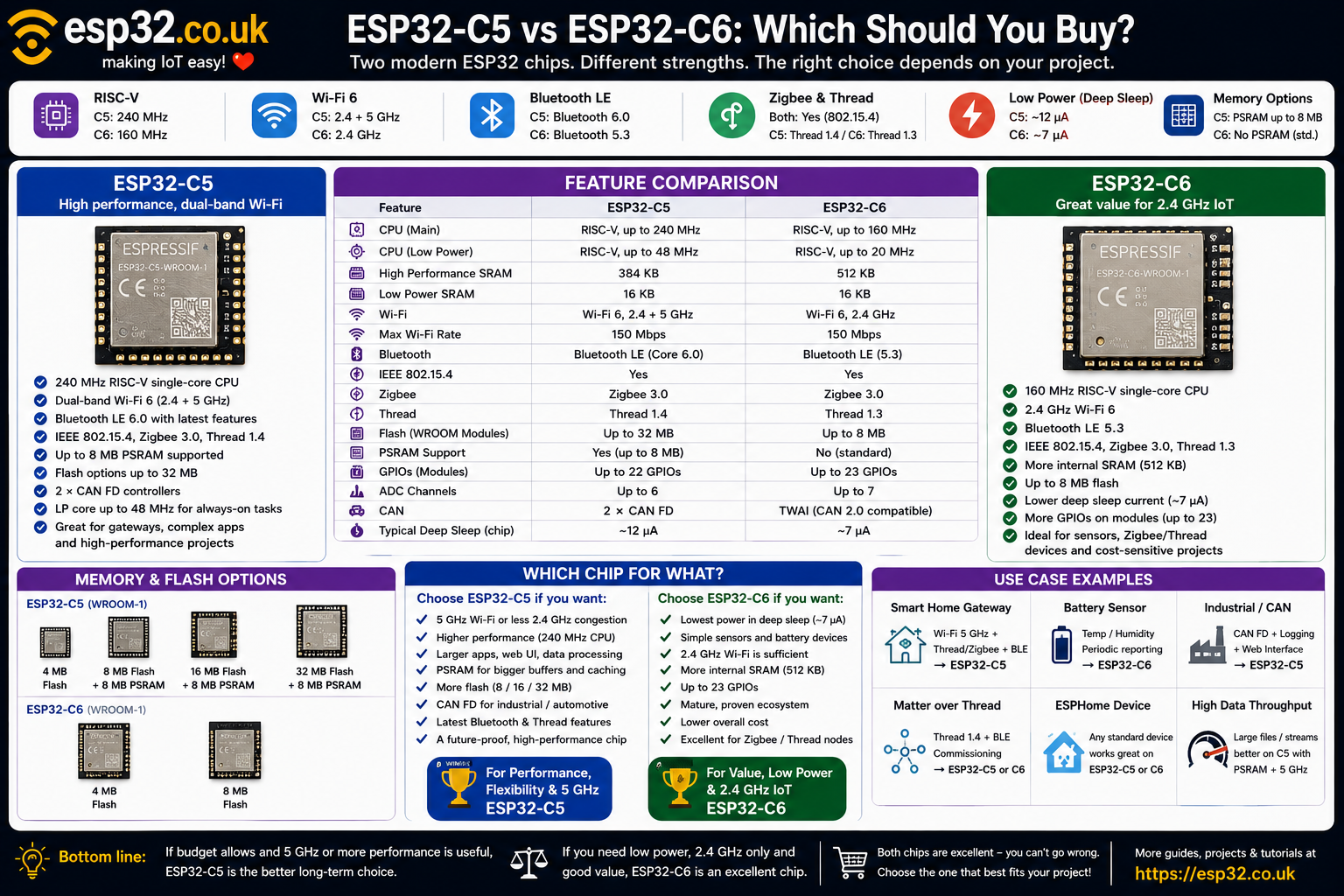
Choose the ESP32-C6 if the project needs Zigbee, Thread, Matter-over-Thread or the more complete smart-home feature set. It combines 2.4 GHz Wi-Fi 6 and BLE with an IEEE 802.15.4 radio, 512 KB HP SRAM and a separate 20 MHz low-power…
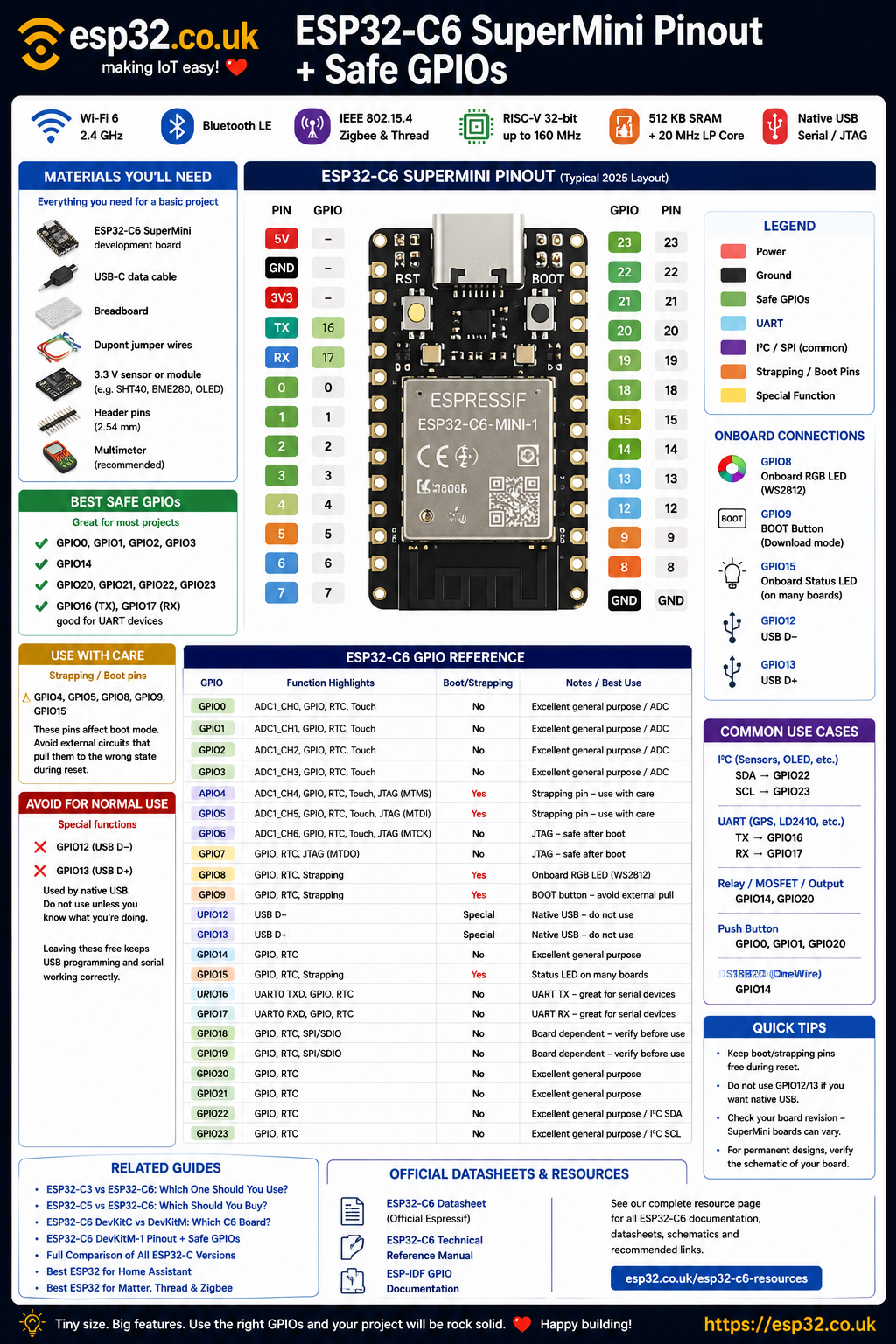
The ESP32-C6 SuperMini is one of the smallest ways to get Wi-Fi 6, Bluetooth LE, Zigbee and Thread in an ESP32 project. On the common SuperMini layout, the easiest GPIOs to start with are GPIO0, GPIO1, GPIO2, GPIO3, GPIO14, GPIO20,…