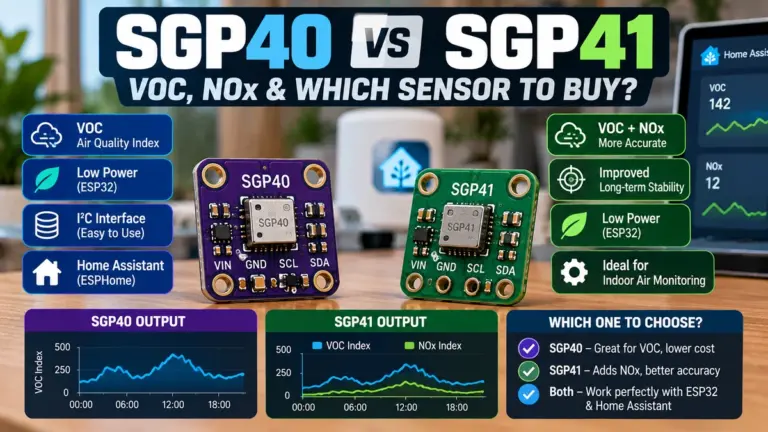
SGP40 vs SGP41: VOC, NOx & Which Sensor to Buy

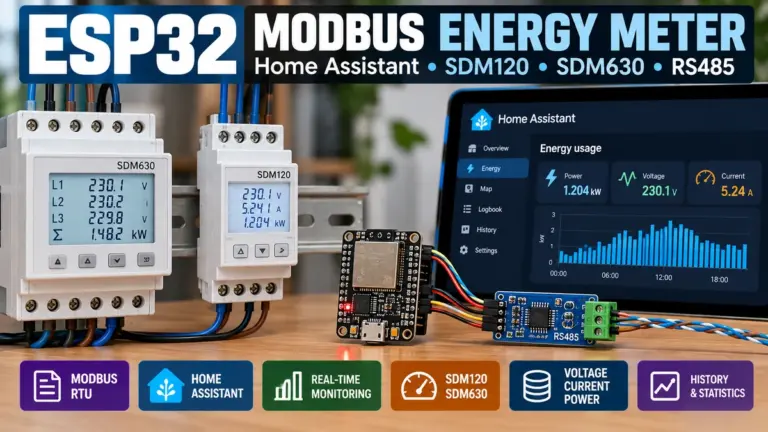
Quick Summary (TL;DR):An ESP32 can turn an RS-485 Modbus energy meter into a completely local Home Assistant energy monitor. For single-phase circuits, an Eastron SDM120-M/Modbus-class meter is one of the easiest DIN-rail choices; for three-phase, solar, EV charging or more…
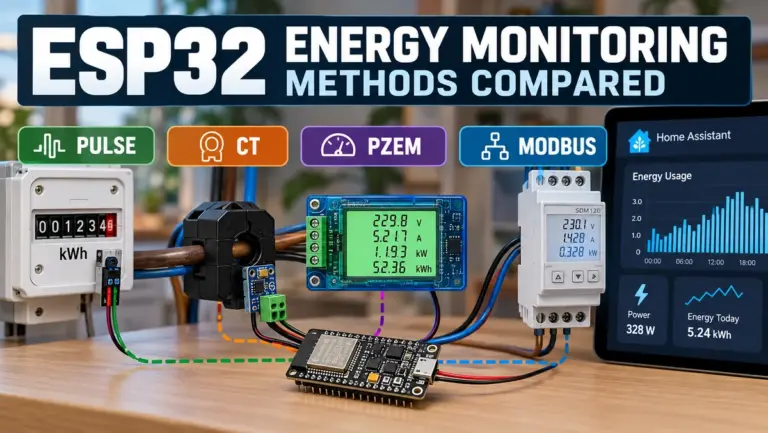
Quick Summary (TL;DR):There is no single “best” ESP32 energy-monitoring method because the four common approaches solve different problems. A pulse reader is the cheapest and safest way to read whole-home energy from an existing utility meter; its accumulated kWh effectively…
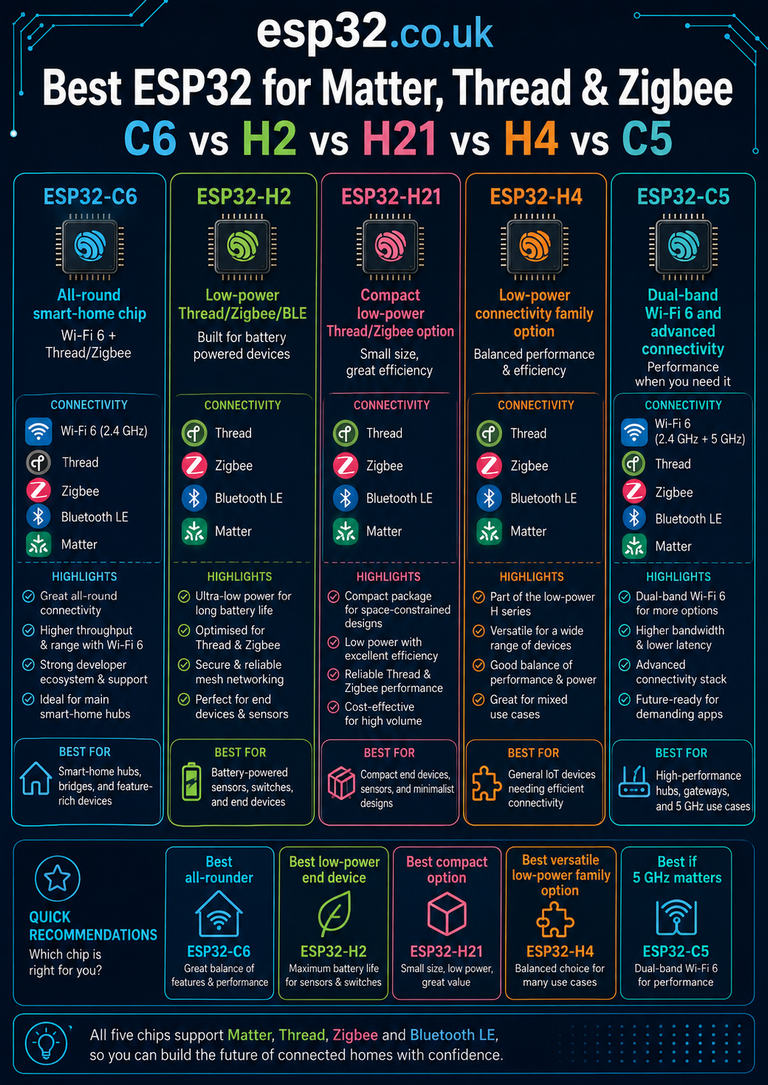
Compare ESP32-C6, H2, H21, H4 and C5 for Matter, Thread and Zigbee. See the best chip for general projects, low-power endpoints and 5 GHz devices.
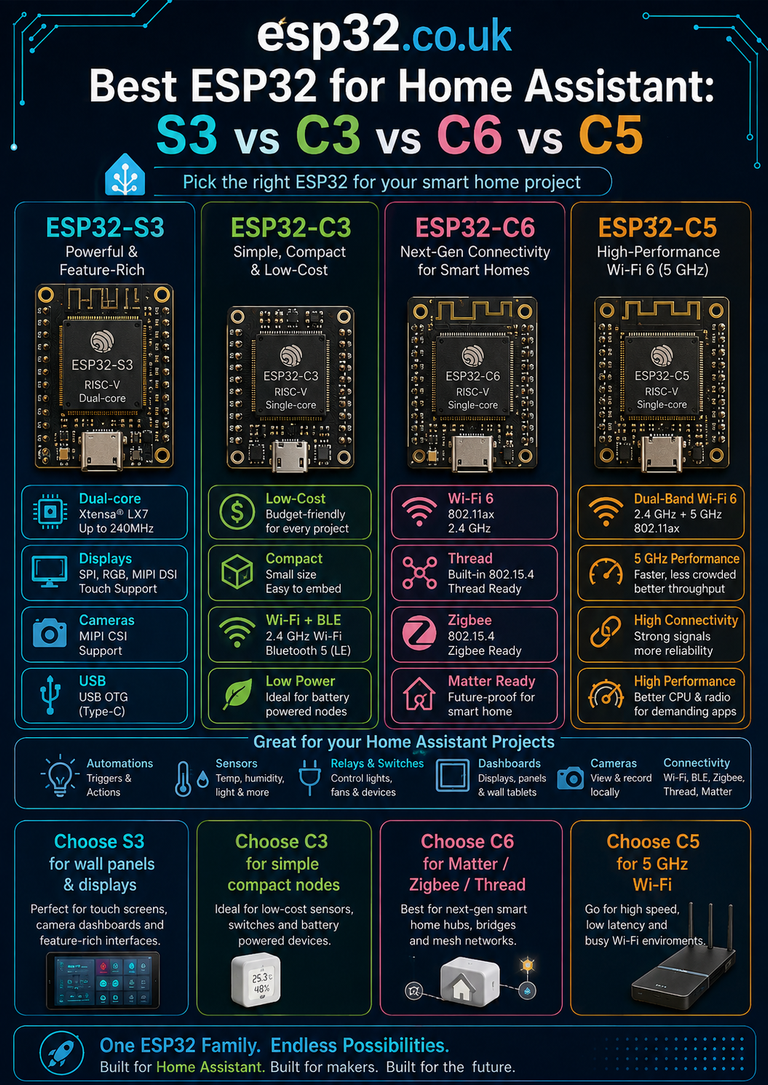
Best ESP32 for Home Assistant and ESPHome: choose C6 for most smart-home nodes, S3 for BLE/voice/display projects, C3 for budget and C5 for 5 GHz.
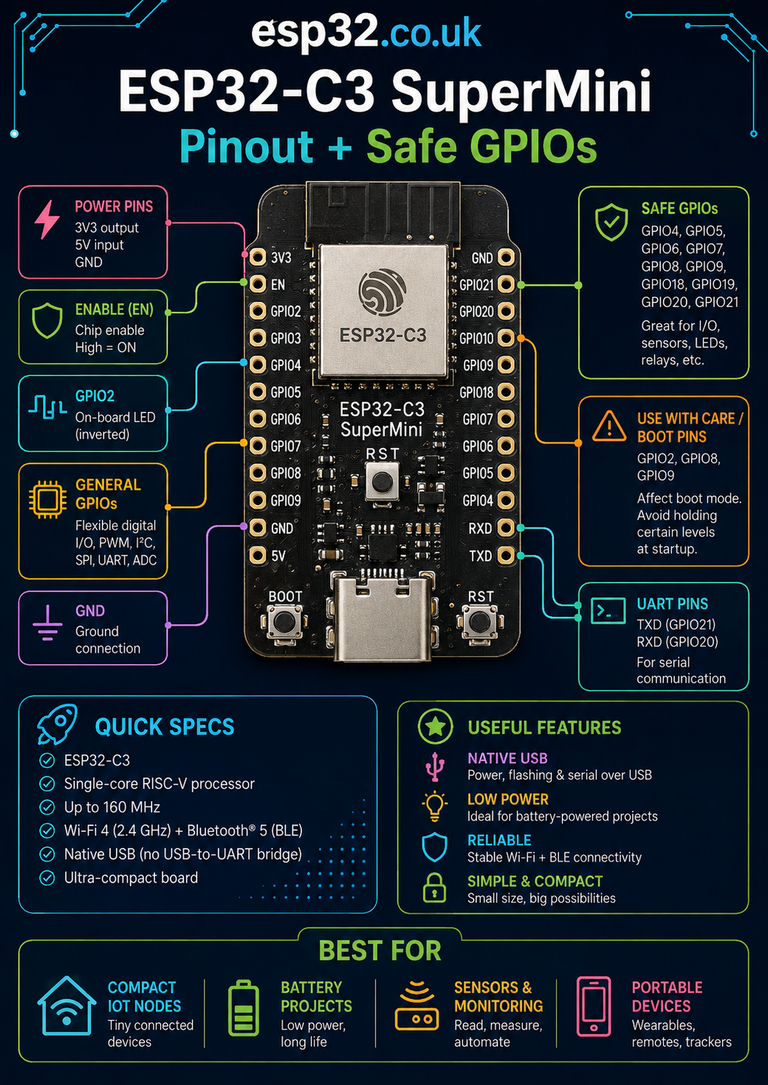
Quick Summary (TL;DR):The ESP32-C3 SuperMini is a tiny third-party ESP32-C3 board built around a 160 MHz single-core RISC-V processor with 2.4 GHz Wi-Fi, Bluetooth LE, native USB and usually 4 MB flash. On the common 16-pin layout, the easiest GPIOs…
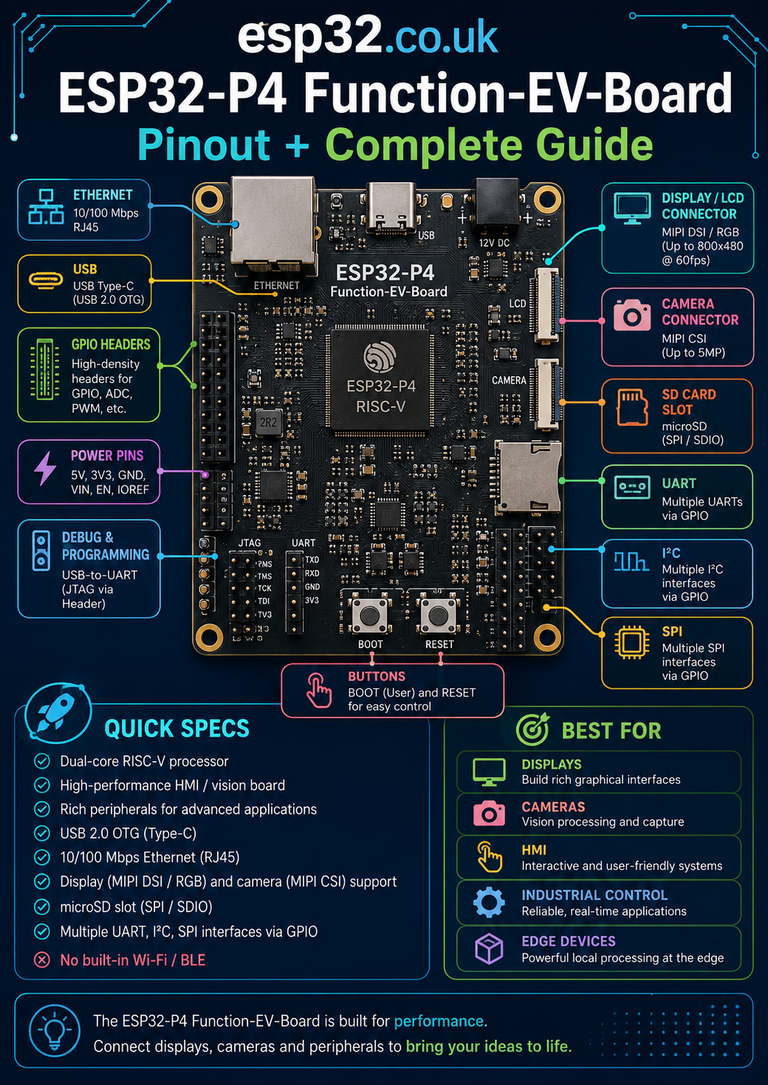
Quick Summary (TL;DR): The ESP32-P4 Function-EV-Board v1.5.2 is not a normal ESP32 DevKit. It is a high-performance multimedia development platform built around the dual-core 400 MHz ESP32-P4 RISC-V processor, with 16 MB flash, 32 MB PSRAM, MIPI CSI camera, MIPI…
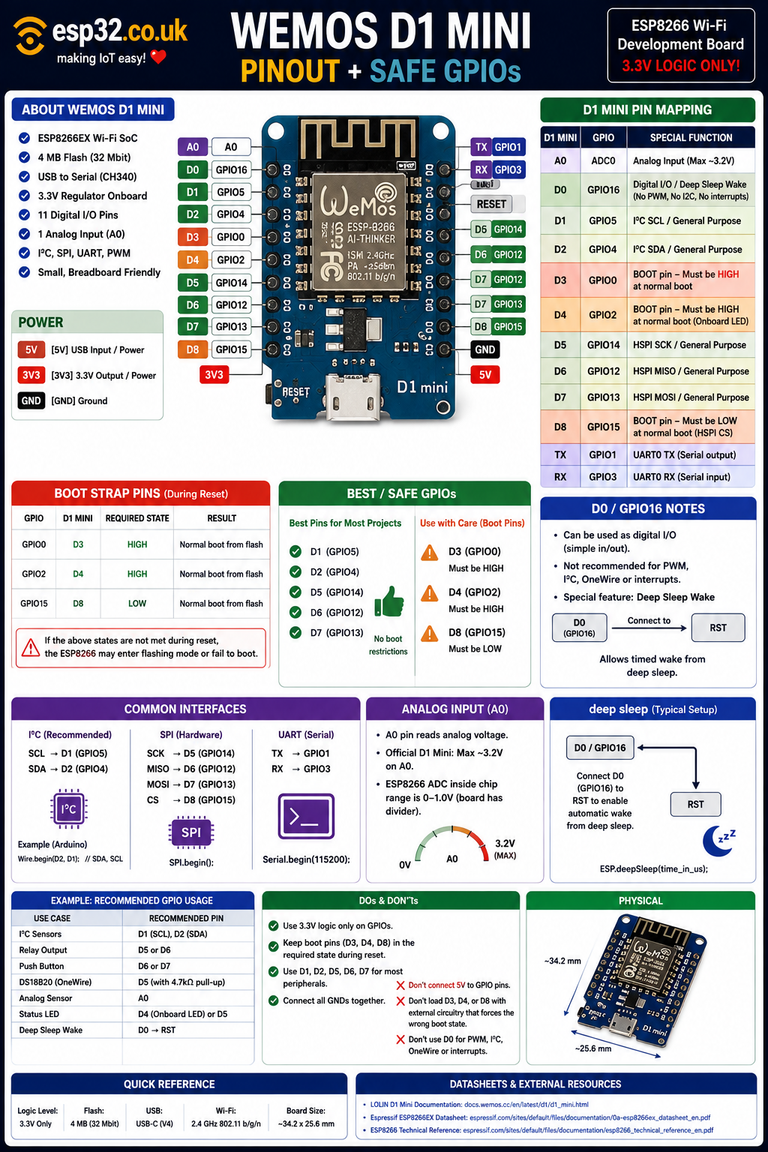
The Wemos/LOLIN D1 Mini is one of the easiest ESP8266 boards to use because it combines a 4 MB ESP8266 module, USB programming, 3.3 V regulation and breadboard-friendly headers in a very small board. For most projects, the best GPIOs…