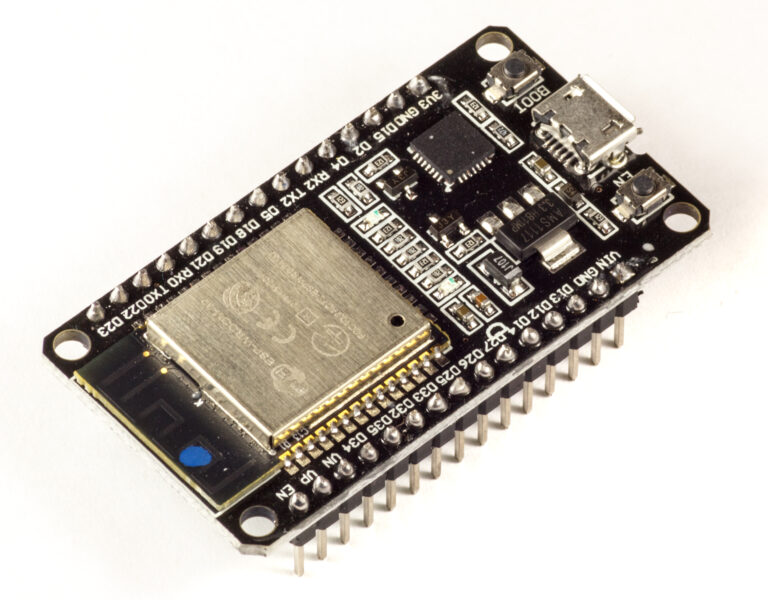
Quick summary: ESPHome 2026.10.2 is a stable patch released late on 2 November 2026, with the project changelog dated 3 November. It restores requested TLS 1.3 support on ESP32PriceAliExpress price audio builds, clears stale Bluetooth-proxy connections and adds a workaround for a LibreTiny compressed-OTA fault that could leave RTL8710B devices needing a serial reflash. It also improves host builds and Apple Silicon development.

ESP32 TLS 1.3 now stays enabled when requested
The most relevant ESP32AliExpress price correction affects configurations that explicitly set CONFIG_MBEDTLS_SSL_PROTO_TLS1_3. ESPHome’s developers found that ESP-IDF also requires the peer-certificate option, which ESPHome normally disables to save resources. The build system could therefore silently omit TLS 1.3 and offer only TLS 1.2.
Version 2026.10.2 keeps the peer certificate when TLS 1.3 is requested, unless the user has explicitly overridden that setting. The patch also increases the audio_http reader-task stack from 4KB to 6KB for TLS 1.3 builds. Testing on Home Assistant Voice Preview Edition found the handshake exceeded the old stack while connecting to Home Assistant’s Modern v6 TLS profile with an ECDSA P-384 certificate.
This is a targeted repair, not a switch that enables TLS 1.3 on every ESPHome node. Existing configurations still determine the protocol and certificate settings.
Bluetooth proxies release abandoned GATT links
The Bluetooth-proxy fix addresses a handover between API clients. If the old subscriber disappeared with a session half open and a new client connected before the keepalive timeout, its GATT links could survive. A peripheral that advertises only while idle could then remain unavailable until the proxy rebooted.
The proxy now disconnects those links when a different subscriber takes over. That should improve recovery after a Home Assistant restart or broken API session, although it does not solve radio-range, placement or interference problems. Those remain separate issues covered in our ESP32 Bluetooth Proxy placement and stability guide.
LibreTiny OTA workaround targets a soft-brick risk
ESPHome 2026.10 introduced compressed OTA uploads. The new patch works around an upstream LibreTiny problem where a failed compressed update on an RTL8710B could be marked as the boot image. Recovery could then require opening the device and reflashing it over a serial connection.
The workaround limits writes and adds validation around the update process. ESPHome reports testing normal installation, a wrong-MD5 rejection and an interrupted upload on BW12, BW15, BK7238 and LN882H hardware. Importantly, LibreTiny covers non-ESP32PricePriceAliExpress price chips; this fix should not be misread as an ESP32 bootloader fault. It also cannot repair a device that is already unbootable.
Host builds and macOS receive smaller fixes
After a successful host: build, Device Builder can now offer the compiled program as a download instead of reporting that no binary was produced. Separate fixes address the precompiled-header path on macOS and start the Apple Silicon cc1plus wrapper through the shell when the Python installation path contains a space.
Should you install 2026.10.2?
This is a stable patch rather than a beta. It is especially relevant to TLS-enabled ESP32 audio devices, Bluetooth proxies that occasionally retain dead connections, LibreTiny nodes using compressed OTA, and developers building ESPHome on macOS. Users unaffected by those paths still receive a small maintenance update over ESPHome 2026.10.1, with no new configuration migration called out in the release notes.
Sources
ESPHome 2026.10.2 release notes
ESP32 TLS 1.3 and audio_http fix
Bluetooth proxy connection-release fix