An open-source Zephyr project is extending the ESP32-S3AliExpress price’s Wi-Fi hardware into an experimental software-defined radio with receive and transmit paths. Developer cyber-murmel’s v0.1.1 release was published on 11 October 2026. This is community firmware, not a new Espressif chip or an official addition to the ESP32-S3AliExpress price’s supported radio features.
Quick summary
- The pre-built v0.1.1 firmware targets the Seeed XIAO ESP32S3 with 8 MB flash, rather than every board carrying an S3.
- The documented PC route uses a Linux SoapySDR module and gqrx, with a 250,000-sample/s input setting.
- Experimental IEEE 802.15.4 work does not make the S3 a ready-made Zigbee or Thread controller.
What changes beyond receive-only ESP-SDR?
The upstream ESPARGOS ESP-SDR firmware exposes raw radio samples for reception; its documentation explicitly says that it currently implements reception only. The separate Zephyr project extends that work with transmission through the radio’s DAC, alongside several selectable applications.
Raw I/Q samples describe a radio signal in a form software can process. Working at this level makes the project interesting for studying modulation and building experimental links, rather than simply sending another Wi-Fi packet. It remains a development platform, with chip-specific behaviour and limitations.
The ready-made route has a specific board and host
The 11 October release supplies a multi-application image for the XIAO ESP32S3 and a SoapySDR module built for an x86-64 Ubuntu 24.04 PC. Other host configurations may require building the module. The board’s shell selects an application, and switching applications changes its USB presentation.
For gqrx reception, the release instructions specify an input rate of 250 kS/s, reflecting the USB full-speed transport limit. Do not confuse a chip’s internal capture rate with the rate a PC application can continuously receive.
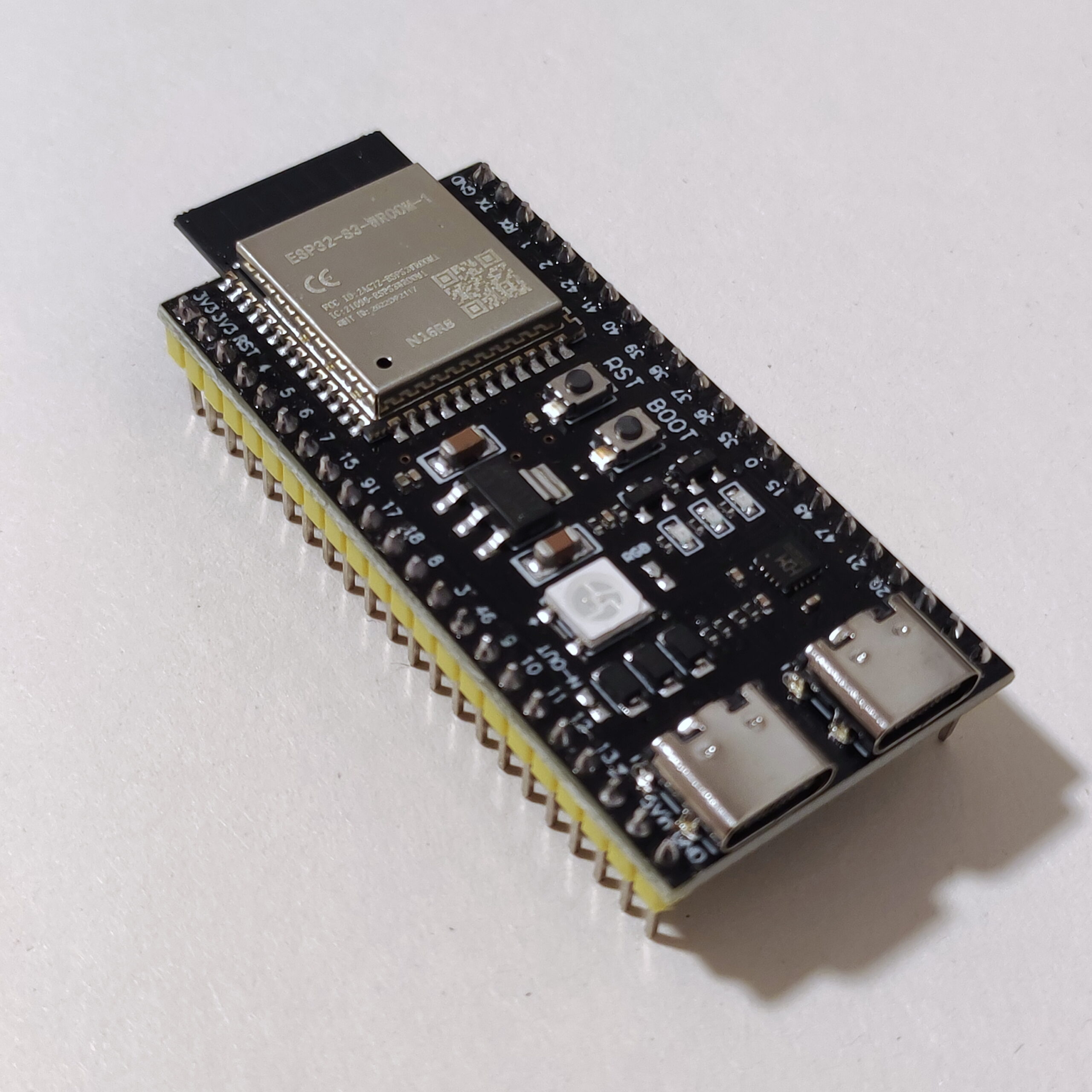
Check the exact board before flashing: our XIAO ESP32-S3 hardware guide explains the standard board. An S3 chip, a particular module’s memory configuration and a development board’s USB wiring are different things; a matching chip name alone does not establish compatibility.
A wide API range is not a wideband radio specification
The README lists a 100–6,000 MHz API range, but approximately 1.8–2.8 GHz PLL lock on the S3. That does not establish useful reception or clean transmission across either range. A frequency parameter is not an RF performance specification.
Treat the hardware as an experimental radio platform, not a substitute for a characterised wideband SDR. The project’s hardware notes also document gain behaviour, distortion and memory constraints. We have not independently measured its RF performance.
802.15.4 experiments are not a complete Zigbee stack
The maintainer’s 802.15.4 notes describe a software PHY on the S3 and two-way tests against an ESP32-C6AliExpress price’s native radio. The reported frame tests used a coax connection; they are not a demonstration of dependable smart-home coverage.
Important pieces remain unfinished in those notes: clear-channel assessment always reports clear, while address filtering, RSSI and calibrated transmit power are not complete. The Zephyr link-layer and OpenThread build is listed as compiling but untested over the air. There is also a documented channel-26 receive problem.
This is useful protocol research, not proof that an ordinary S3 board can now replace a Zigbee coordinator or Thread border router. For conventional projects, start with hardware designed for native 802.15.4 support; our XIAO ESP32-C6 guide covers the board-level differences.
Who should try it?
The strongest use case is a controlled RF bench experiment for developers interested in signal processing and Zephyr. Use a spare board, keep a recovery route available and begin with a suitably attenuated, conducted test setup. This is not firmware to put on a working Home Assistant sensor merely to gain an extra feature.
The library takes over the Wi-Fi radio: do not scan, connect or start an access point during SDR operation. Its source is GPL-3.0-or-later; consult the current board-specific instructions before experimenting.