Espressif has announced the ESP32-H4, a new System-on-Chip aimed at advanced battery-powered wireless products, and the company says samples are now available on request. The announcement was published on March 27, 2026.
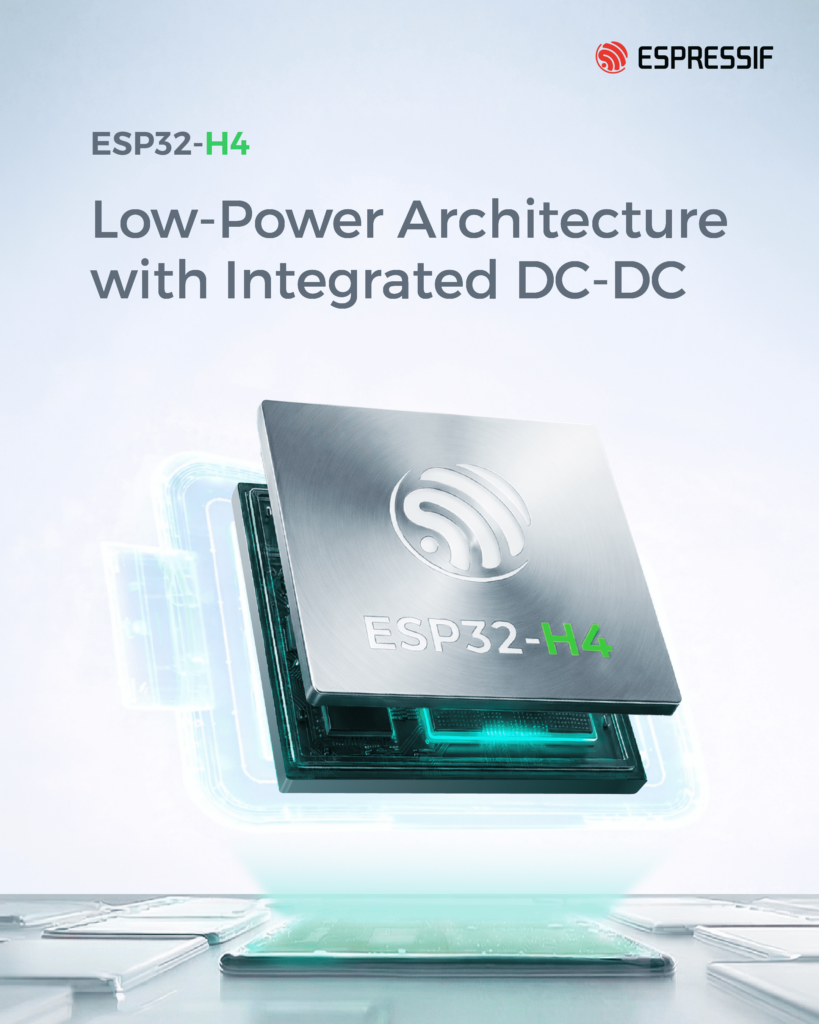
The main selling point of the ESP32-H4 is simple: low power without giving up useful wireless features. Espressif says the chip is optimized for long battery life, using an integrated DC-DC converter, fine-grained power control, and multiple low-power operating modes to reduce losses and help devices run for long periods from compact power sources. The company also says a reduced maximum transmit-power option helps lower RF current draw in devices that transmit often.
That makes the ESP32-H4 a natural fit for products like wearables, remote sensors, healthcare devices, and portable wireless accessories. This is not the kind of chip Espressif is pushing as a do-everything flagship. It is being positioned much more clearly as a purpose-built low-power wireless SoC for products where battery life matters more than flashy specs.
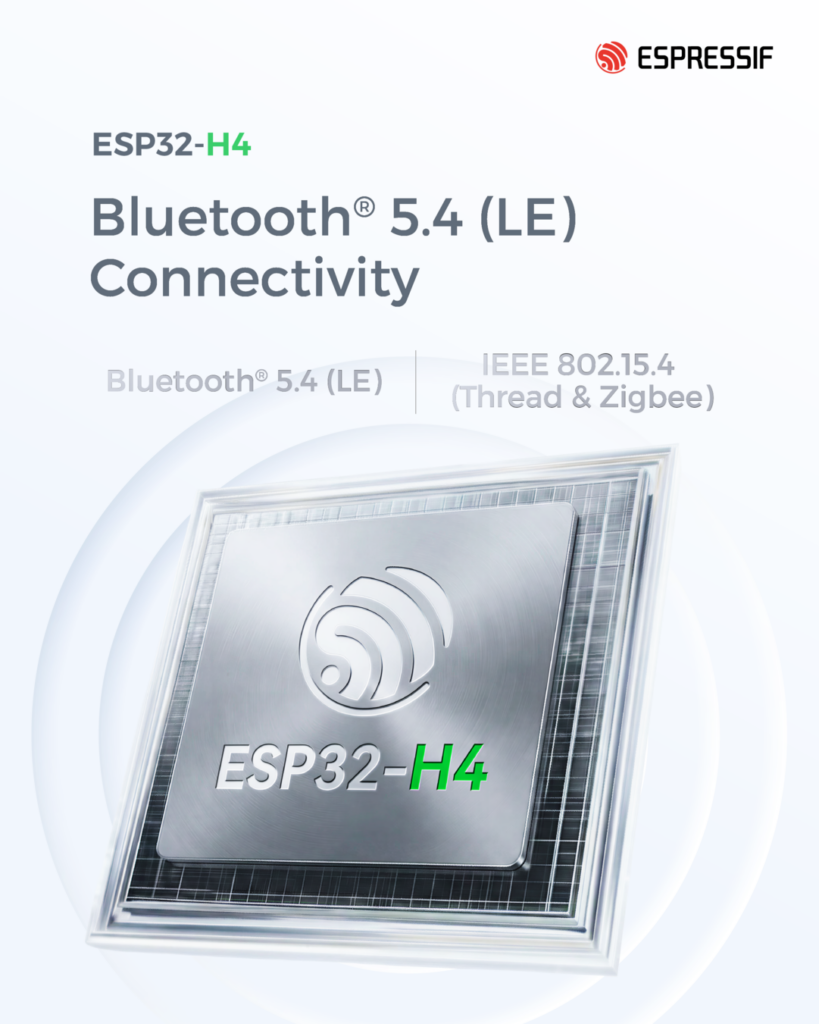
On the wireless side, the big story is Bluetooth 5.4 LE. Espressif says the ESP32-H4 fully supports the features defined in the Bluetooth 5.4 LE Core Specification and has also passed Bluetooth 6.0 certification. The company highlights low-power Bluetooth features such as advertising without CPU involvement, which is especially useful for small sensors and always-on battery devices.
Espressif is also giving the ESP32-H4 a surprisingly strong Bluetooth feature set for such a power-focused chip. The company specifically lists LE Audio, LE Isochronous Channels, Connection Subrating, Periodic Advertising with Responses (PAwR), and Direction Finding (AoA/AoD). In practice, that means the chip can target a wide spread of products, from earbuds and speakers to medical sensors, electronic shelf labels, and indoor positioning or asset-tracking systems.
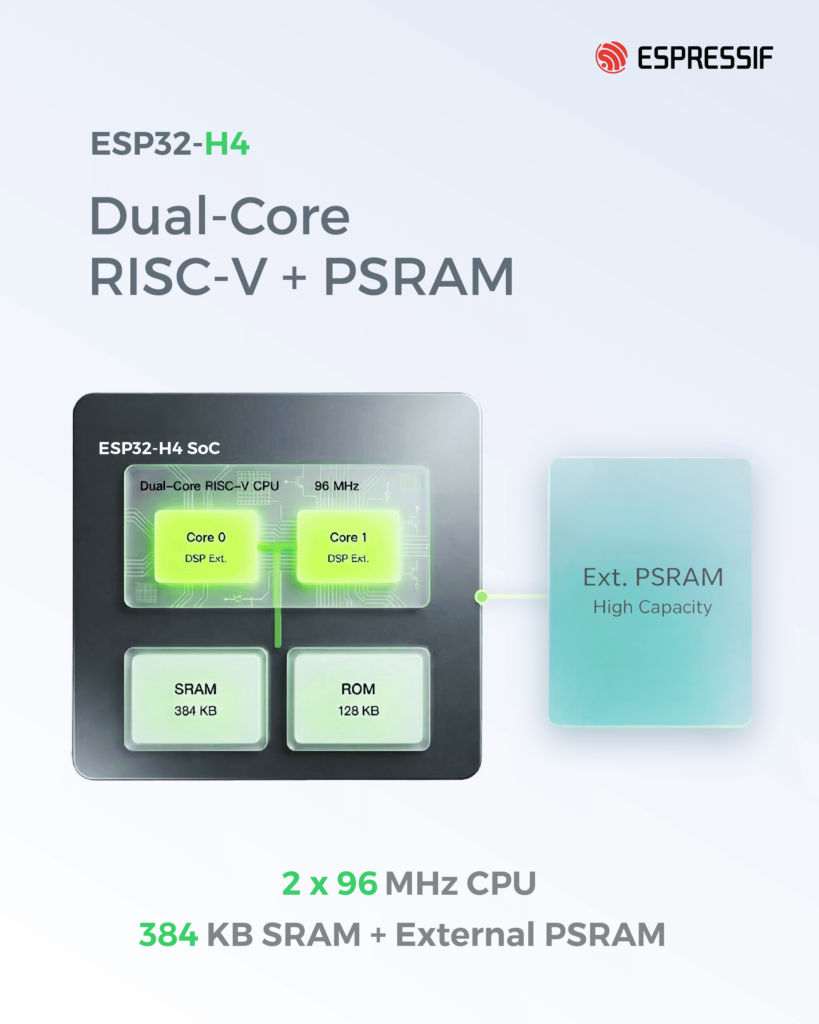
Under the hood, the ESP32-H4 uses a dual-core 32-bit RISC-V MCU clocked at up to 96 MHz, with 384 KB of on-chip SRAM and 128 KB of ROM. Espressif also says it supports external PSRAM, which should help in designs that need larger buffers, more complex protocol stacks, or heavier data processing than the on-chip memory alone can comfortably handle.
Security has not been ignored either. Espressif says the ESP32-H4 includes secure boot, external memory encryption, digital signature with ECDSA support, cryptographic accelerators, and a true random number generator. That is important because low-cost battery products are often where security gets compromised first, so it is good to see Espressif still pushing its usual security stack here.
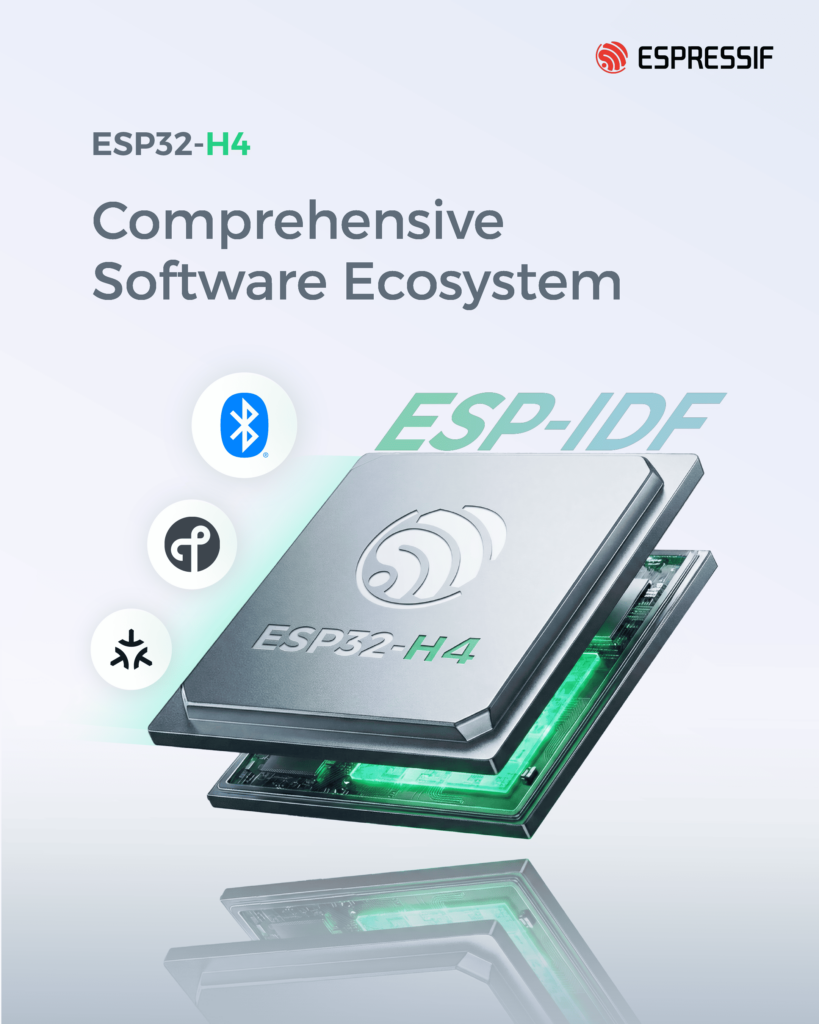
From the software side, the ESP32-H4 will be supported by ESP-IDF and fits into Espressif’s broader Bluetooth ecosystem, including ESP-BLE-MESH and ESP-BLE-AUDIO. Espressif also says future ESP-Matter support will make it easier to build Matter-enabled, Thread-based battery-powered devices for smart-home use. That part is especially interesting, because it hints that the H4 may end up becoming a serious option for low-power smart-home endpoints rather than just generic BLE gadgets.
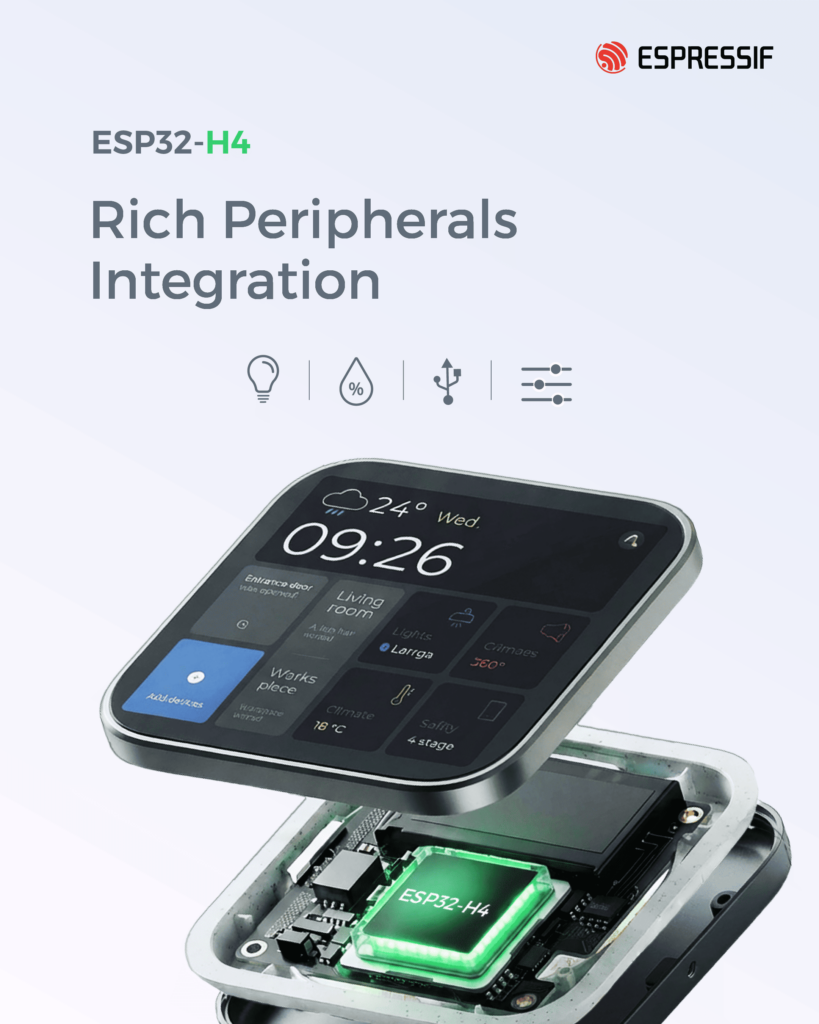
In terms of hardware flexibility, Espressif says the ESP32-H4 supports up to 40 GPIOs and includes a broad set of peripherals such as I2C, I2S, SPI, UART, ADC, LED-PWM, timers, DMA, TWAI, USB-OTG, and MCPWM, plus 15 touch-sensing GPIOs. So while the headline is low power, it still looks like a capable part for real product designs, not a stripped-down niche chip.
The blunt takeaway is that the ESP32-H4 looks like a smart strategic addition to the ESP32 family. Espressif already has plenty of chips for general Wi-Fi and mixed-connectivity work. What the H4 does is push harder into the battery-powered Bluetooth and low-power endpoint space, while still leaving room for richer applications, stronger security, and future Matter-based smart-home products. For esp32.co.uk, that makes it a very solid news post because it shows where Espressif is expanding next, not just what chip number came out this week.