Quick summary: HackerGadgets has opened pre-orders for a Raspberry Pi HAT that combines an RTL-SDR receiver, an SX1262PriceAliExpress price LoRa radio, GNSS and a battery-backed real-time clock. The board starts at $84.90 without antennas, and the manufacturer currently shows an estimated 27 November shipping date—but also warns that this date can change.
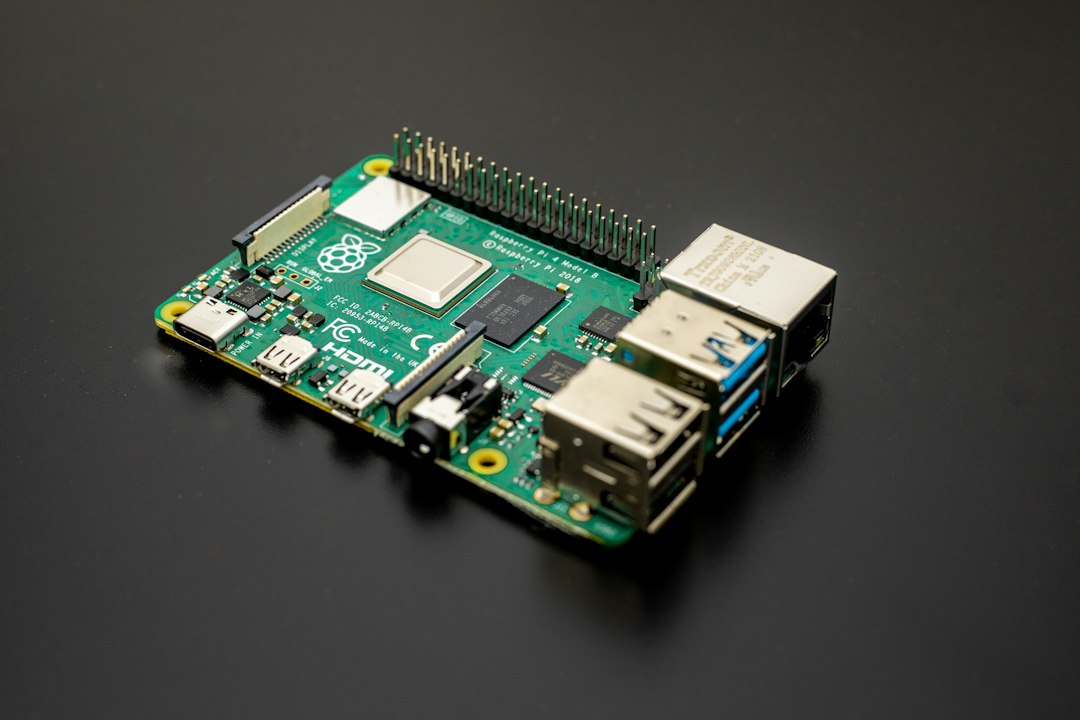
The paid pre-order was publicly announced on 20 November 2026, following an earlier preview and waiting list in May. That is the new development here: the four-function concept is not brand new, but buyers now have a price, order page, detailed pin map and setup documentation.
Four functions, using four different paths
| Function | Main hardware | Raspberry Pi connection | Verified capability |
|---|---|---|---|
| RTL-SDR receiver | RTL2832U + R860 | USB-C or internal USB cable | 100 kHz–1.74 GHz; HF direct sampling to 28.8 MHz |
| LoRa | Semtech SX1262AliExpress price | SPI1 | 860–960 MHz hardware range; up to 22 dBm; Meshtastic support |
| GNSS | GPS/BeiDou/GLONASS module | UART, with optional PPS | NMEA output; active or passive antenna support |
| Real-time clock | NXP PCF85063A | I²C1 | Timekeeping through power loss using an onboard rechargeable cell |
The interface split is important. The 40-pin header supplies power and carries LoRa, GNSS and RTC signals, but it does not carry the RTL-SDR USB data. The receiver still needs either the board’s USB-C port or the supplied internal cable connected to a Raspberry Pi USB port. The two USB connectors share the same data lines and the documentation says only one may be connected to a host.
What the radio hardware can—and cannot—do
The RTL2832U/R860 section is a receive-only software-defined radio, not a wideband transmitter. HackerGadgets specifies a TCXO, software-controlled 5 V bias tee and a 100 kHz to 1.74 GHz tuning range, with direct sampling for 100 kHz to 28.8 MHz HF reception. Potential uses include ADS-B, weather-satellite reception and general spectrum monitoring, but no independent sensitivity, dynamic-range or oscillator measurements have been published.
Transmission comes from the separate SX1262PriceAliExpress price LoRa radio. Its stated hardware coverage is 860–960 MHz with up to 22 dBm output, and the setup guide includes Meshtastic. That broad figure is not permission to transmit anywhere in the band: users must select the correct Meshtastic region, antenna and legal power limit. Our SX1276 versus SX1262 comparison explains the radio-generation difference, while our ESP-SDR report covers a very different experimental SDR route.
Setup is more involved than fitting a normal HAT
HackerGadgets recommends 64-bit Raspberry Pi OS. I²C, SPI and UART must be enabled, the serial-console entry must be removed before the GNSS UART is used, and the three RF functions need suitable antennas. The instructions also warn against transmitting with the LoRa antenna disconnected and against enabling the SDR bias tee for an unsuitable passive antenna.
The board fits Raspberry Pi 3B, 4B and 5 directly. A Pi Zero or Zero 2 W needs a fitted 40-pin header and enough physical and power headroom. Compute Module 4 and 5 systems require a carrier or adapter exposing the header; module compatibility does not mean the HAT plugs into a bare Compute Module. HackerGadgets recommends the official 5 V/5 A supply for Pi 5Price and a stable 5 V/3 A supply for Pi 4. Our Raspberry Pi 5 hardware guide covers the wider power and expansion trade-offs.
Price and availability
The HAT costs $84.90 without antennas; the Raspberry Pi is not included, and shipping, tax and import charges are extra. The product selector currently says “In stock”, but the manufacturer’s own note explicitly describes it as a pre-order and warns that the estimated shipping date changes often. Treat 27 November as a target rather than proof that units have already dispatched.
For a portable Raspberry Pi radio node, putting reception, LoRa messaging, positioning and persistent timekeeping on one board is tidy. The trade-off is a stack with three antennas, a separate USB data path and several Linux interfaces to configure. This is a compact integration board, not a plug-and-play radio appliance, and we have not tested its RF performance.