Quick summary: Espressif published esptool 5.7.0 on 24 November 2026, adding richer ESP32-S31 variant reporting, flash power-on handling for ESP32-P4Price ECO8 silicon and the v2.0.0 flasher stub. The release also makes an eFuse command name broader without breaking its old aliases and tightens checks around encrypted writes.
What changed in esptool 5.7.0
Espressif’s esptool is the Python-based serial utility used to flash, provision and inspect ESP chips. Version 5.7.0 is a tooling release, not new firmware for boards and not an ESP-IDF update. Its GitHub release was posted on 24 November, while the embedded changelog carries the date 23 November.
| Change | Practical effect |
|---|---|
| ESP32-S31 variant reporting | esptool now reads eFuse data to identify embedded PSRAM capacity and vendor information, reporting 16 MB, 32 MB or no embedded PSRAM where the silicon data is recognised. |
| ESP32-P4 ECO8 flash handling | The flash power-on path now covers the ECO8 silicon revision as well as the earlier ECO6 and ECO7 cases. |
| Flasher stub 2.0.0 | The bundled RAM-resident helper moves to Espressif’s new plug-in-start mechanism across supported targets. |
calib-info command | espefuse adc-info is renamed to calib-info because it can show more than ADC calibration data; compatibility aliases remain. |
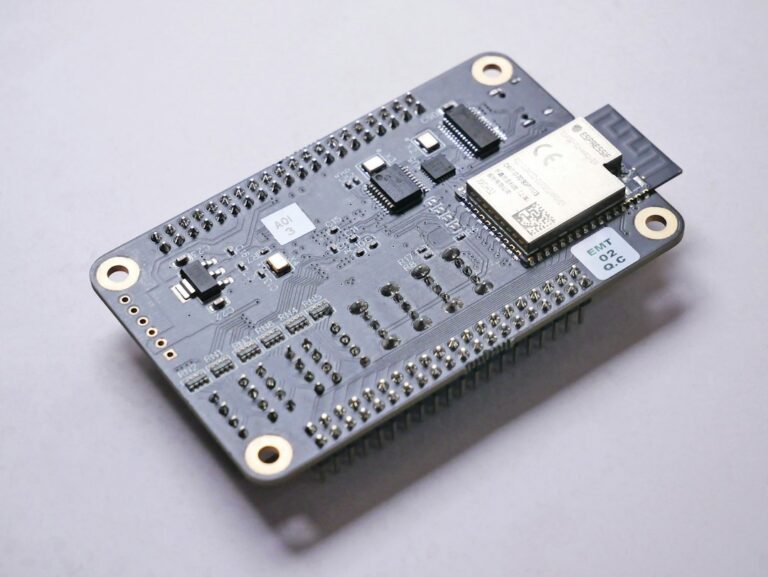
The ESP32-S31 change is the most visible for developers working with newer silicon. Instead of reporting only a generic ESP32-S31 name, the chip description can now distinguish variants such as those with 16 MB or 32 MB of embedded PSRAM. The feature list also reports whether embedded PSRAM is absent and, where encoded, its vendor.
That information comes from the chip’s eFuses. It does not describe the connectors, power circuit, antenna or peripherals exposed by a development board, and it does not by itself add support to Arduino, PlatformIO or another framework. For context, the recent Arduino-ESP32 4.0.0 release added ESP32-S31 support separately.
Why the ESP32-P4 and encrypted-write fixes matter
On ESP32-P4 ECO6 and later revisions, external flash may start powered down after a silicon default changed from 1.8 V to 3.3 V to protect 1.8 V parts. esptool already handled ECO6 and ECO7; version 5.7.0 extends that path to ECO8 and accounts for its revised flash-power behaviour. This is a host-tool compatibility fix for that silicon revision, not a speed claim or a change to existing ESP32-P4 board hardware.
The release also fixes validation for files supplied through --encrypt-files. Addresses that do not meet the chip’s encrypted-write alignment requirement are now caught by the same guard used for other encrypted input. That is useful in provisioning scripts, where failing early is preferable to attempting an invalid encrypted flash operation.
A smaller fix prevents espefuse from retaining more than one result callback when its main() entry point is invoked repeatedly from the same Python process.
Availability and upgrade notes
esptool 5.7.0 is available now from GitHub and PyPI under GPL-2.0-or-later. The PyPI package requires Python 3.10 or newer and was published with provenance metadata linking it to Espressif’s GitHub Actions release workflow.
Developers who install esptool directly can update it through pip. Those receiving it through an SDK, IDE or board package should first check the version pinned by that environment: installing the standalone package does not automatically replace the copy bundled with a toolchain. The same distinction applies to ESP-IDF 6.1.1 and its ESP32-P4 fixes, which are a separate framework release.