Quick summary: Espressif released stable ESP-IDF 6.1.1 on 16 November 2026. The bug-fix update addresses two ESP32-P4Price boot failures, blocks accidental plain-HTTP use in the HTTPS OTA helper, closes an HTTP request-smuggling path and makes several compatibility-changing corrections.
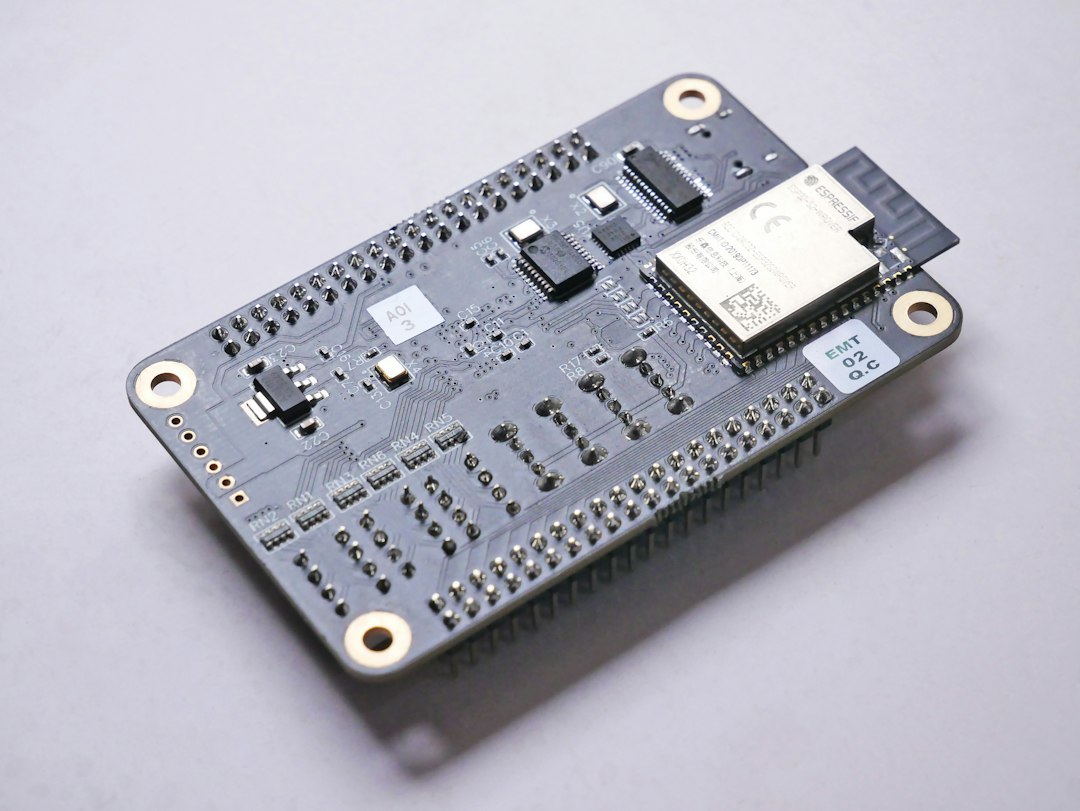
Two specific ESP32-P4 boot faults are fixed
The first correction targets ESP32-P4 v3.x applications using execute-in-place from PSRAM. Espressif says affected applications could repeatedly reset with CHIP_LP_WDT_RESET when paired with a bootloader built using ESP-IDF 5.5.2 through 5.5.4. The fix matters to projects that deliberately mix bootloader and application builds across framework versions; it is not a claim that every ESP32-P4 board was unable to boot.
A second fix clears stale flash data left in the P4’s L1 cache after the bootloader remaps memory. That fault could surface during esp_mmu_map_init or pmu_init. Teams deploying P4 hardware should rebuild and test the exact bootloader, application and PSRAM configuration they ship rather than validating only a newly compiled application.
The corrections are relevant to developers evaluating newer boards such as the SparkFun ESP32-P4 IoT RedBoards, although the release notes do not say those products are necessarily affected. They also follow recent work on ESP32-P4 memory-protection debugging.
OTA and HTTP handling become stricter
esp_https_ota now rejects plain HTTP downloads unless the option to permit them is explicitly enabled. This makes a secure failure the default when an OTA URL or configuration is wrong, rather than silently allowing an unencrypted transfer. Espressif also snapshots arguments supplied by the rich execution environment into trusted-execution memory before running secure services, and ports security fixes from the upstream Wi-Fi supplicant.
The built-in HTTP server fixes Content-Length truncation that could enable request smuggling. A new HTTPD_MAX_REQ_BODY_LEN_KB option caps accepted request bodies and defaults to 16MB. That is a security improvement with a practical compatibility cost: applications that intentionally accept larger uploads will need to review the limit and their surrounding memory and timeout controls.
Breaking changes need attention
BLE Audio APIs now return errors in two places where they previously returned void, and two codec-data helpers gain an output-length parameter. Address order is standardised to least-significant-byte first for BLE ISO and BLE Audio, so Bluedroid applications that convert addresses at their API boundary may need changes.
Espressif has also removed Key Manager support from ESP32-C5PriceAliExpress price, ESP32-P4 and ESP32-S31 because the hardware peripheral needs further design changes before it can be offered as a production feature. This does not remove the chips’ general cryptographic or secure-boot capabilities; it withdraws one specific peripheral interface. Separately, the MAC_EXT byte order is corrected on ESP32-C5PriceAliExpress price and ESP32-H21 to produce the proper IEEE 802.15.4 EUI-64, which may change raw values consumed by existing applications.
Smaller additions and availability
The image signal processor can now take RAW image data directly from memory rather than requiring a sensor interface. RGB LCD code gains DMA2D bitmap drawing. These are framework capabilities, not proof that any particular module or development board exposes a camera bus, display connector or sufficient external memory.
ESP-IDF 6.1.1 is available now. Espressif recommends its Installation Manager, using eim install -i v6.1.1, while Git users can clone the signed v6.1.1 tag with submodules. Projects moving from earlier branches should first review the broader ESP-IDF 6.0 migration changes, then test HTTP body limits, BLE address conversion and any code that reads MAC_EXT.