Quick summary: ESPHome 2026.11.0 reached stable on 18 November. The release adds a UDP fallback to the native ESPHome OTA path for unreliable links, makes HTTP requests asynchronous and moves the experimental OpenThread border router onto the stable branch. Before updating, ESP32 users should check the new ESP-IDF, OpenThread, esp32_hosted, MQTT and RMT requirements.
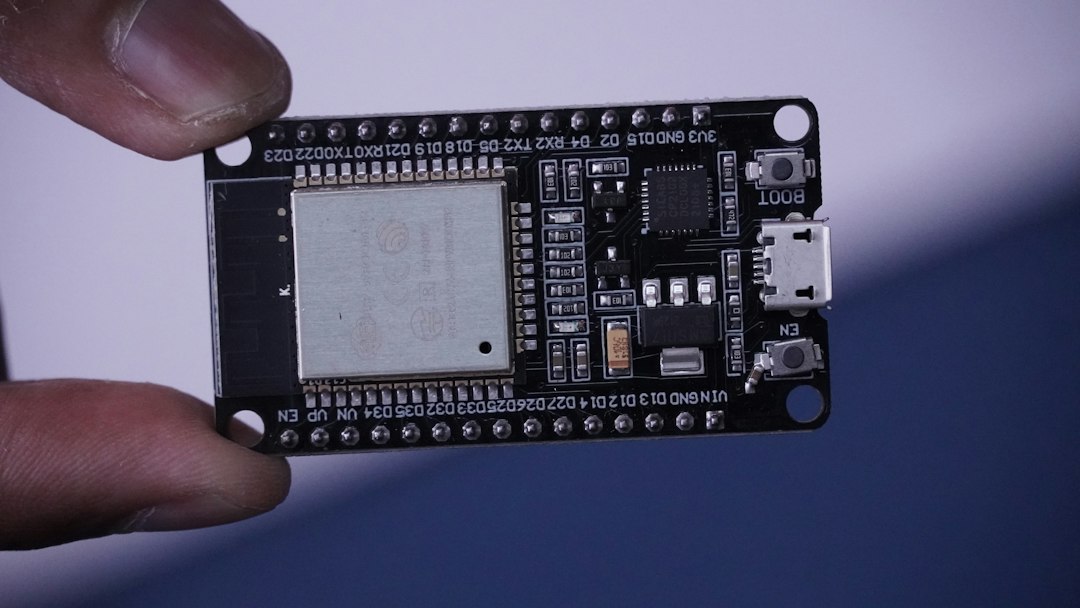
ESPHome has published 2026.11.0 as a final stable release, turning this month’s broad beta into a practical upgrade decision for deployed nodes. The headline additions are useful, but the most important part for existing ESP32 installations is the completed migration checklist: several configurations now have higher framework requirements or stricter validation.
What reached stable
The first beta introduced more than 30 components and the experimental ESP32 OpenThread border router, which we covered in our ESPHome 2026.11 beta report. A later beta added important ESP32 I²C watchdog and ESP32-P4Price audio fixes, detailed in our 2026.11.0b3 coverage.
The final release carries those changes into the stable channel and adds late reliability work around Wi-Fi reconnection, MQTT and Bluetooth proxies. ESPHome also says its revised generated automation code saves about 1.6KB of RAM in a modest ESP8266Price or ESP32 ESP-IDF configuration. That is not a benchmark for every device, but it is useful headroom on smaller nodes.
The ESP32 upgrade checklist
- ESP-IDF 5.1 is now the general minimum. ESP32 OpenThread configurations require ESP-IDF 5.5.5 or later.
esp32_hostedmoves to 3.1.0. It requires ESP-IDF 5.5 or later, while one-bit SDIO configurations must now defined1_pin.- OpenThread-only builds may default to IPv4 off. Projects that still need IPv4 should explicitly add
network:withenable_ipv4: true. http_requestactions are asynchronous. They no longer hold up the main loop while waiting for a response, but automations that can overlap may need a deliberatequeuedorparallelscript mode.- Oversized MQTT messages are handled more defensively. ESP32 payloads above 32KB are dropped by default unless
max_payload_sizeis increased. - RMT conflicts fail earlier. Conflicting uses of ESP32 RMT resources by LEDPrice strips, remote transmitters or receivers should now be rejected during validation rather than surfacing after boot.
Lossy-link OTA and Thread routing
For native ESPHome OTA updates, 2026.11.0 can fall back from TCP to UDP when the link is unreliable. That is aimed at nodes on marginal Wi-Fi where a conventional transfer repeatedly stalls; it does not turn every firmware update mechanism into a UDP service, so users should keep normal network and authentication precautions in place.
The OpenThread border router remains explicitly experimental. An ESP32-C5AliExpress price or ESP32-C6 can use its native 802.15.4 radio alongside Wi-Fi, while another Wi-Fi-capable ESP32 can host an external radio co-processor over UART. ESPHome reports that its native-radio test ran for two weeks without a restart, but the external RCP configuration occasionally hung during a three-week soak test. That distinction matters: this is promising maker-grade infrastructure, not yet a reason to replace a proven production border router.
Asynchronous HTTP requests should also make busy nodes more responsive because network waits no longer block the main loop for the full transaction. Existing automations still deserve review, particularly where later actions assumed that an HTTP request had already completed.
Availability
ESPHome 2026.11.0 is available now as the project’s stable release. Back up the current configuration, validate it against the new release and check the items above before rolling it across a fleet. The Thread router is best treated as a test feature, while the OTA and HTTP changes are the more immediately practical improvements for conventional ESP32 nodes.