Quick summary: ESPHome 2026.11.0b3 was released on 9 November 2026 with fixes for a classic ESP32PriceAliExpress price I²C interrupt storm, ESP32-P4Price APLL audio, an ESP32-S3PriceAliExpress price IPv6 race and stalled VL53L0XAliExpress price distance sensors. It remains a pre-release; the current stable branch is still 2026.10.2.
ESPHome has published 2026.11.0b3, a corrective beta that addresses several hardware-specific reliability problems discovered during testing. It follows the feature-heavy beta covered in our ESPHome 2026.11 overview, but the main changes this time are fixes rather than new components.
Classic ESP32 I²C faults could starve the CPU
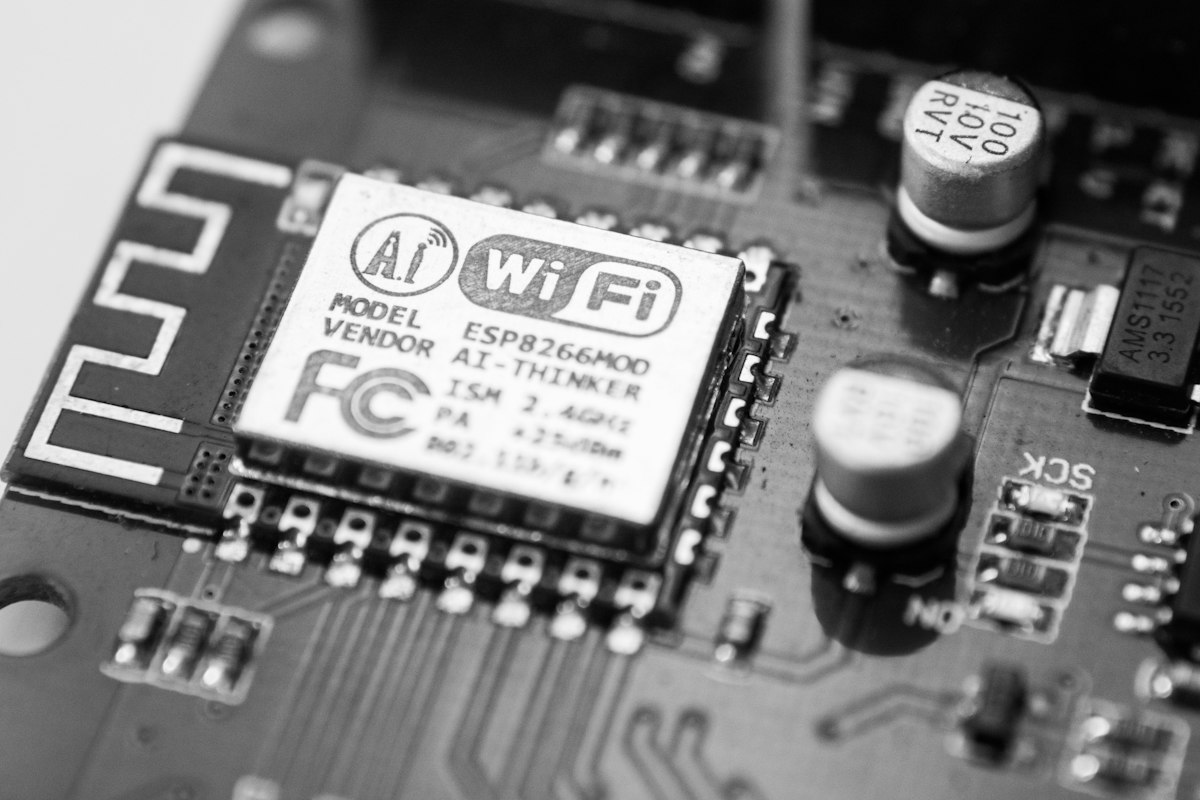
The most consequential fix targets the original, or “classic”, ESP32. According to the merged ESPHome change, some I²C bus faults could leave the controller repeatedly firing an ACK-error interrupt. ESP-IDF cleared the interrupt but did not mask it in that state, allowing it to fire again immediately, starve the processor and eventually trigger an interrupt-watchdog reset.
ESPHome now places a guard around the ESP-IDF I²C interrupt handler. If the same NACK, timeout or arbitration error remains active, the affected I²C interrupts are masked until the next transaction, when the driver enables them again. The intention is to let the board continue running and give the bus a chance to recover instead of resetting.
This is not a blanket cure for every ESP32 I²C problem. Wiring faults, incorrect pull-ups, address conflicts and marginal power supplies can still break a bus. The change specifically handles an interrupt-storm failure mode after certain controller errors, which is most relevant to ESPHome nodes connected to sensors or expanders in electrically noisy installations.
ESP32-P4 APLL audio is restored
Beta 3 also corrects an ESP32-P4 audio regression. The I²S component checked whether I2S_CLK_SRC_APLL existed as a preprocessor macro, but on the ESP32-P4 it is an enum value. The check therefore failed and use_apll: true silently selected the default clock source instead.
The submitted test case used an ESP32-P4 in secondary I²S mode with 32-bit samples, where the speaker could fail to start with a “sample rate is too large” error. ESPHome now checks the chip capability flag instead, restoring the intended audio phase-locked loop. This is a targeted correction for configurations that request APLL; it does not imply that every ESP32-P4 audio setup was broken.
ESP32-S3 IPv6 and VL53L0X recovery
An ESP32 Wi-Fi timing race could also prevent creation of the IPv6 link-local address. The developer reported it on roughly half of ESP32-S3 boots during testing. Devices requiring a minimum IPv6 address count could take minutes to connect, while other configurations might come online over IPv4 but remain without IPv6 until the next reconnection. The fix creates the address through lwIP’s TCP/IP context so it no longer depends on event-handler timing.
The VL53L0X time-of-flight sensor component now recovers after a failed I²C read instead of potentially stopping until reboot. A pending measurement that exceeds its timing budget and another update interval is restarted. Beta 3 also adjusts timing and edge interrupts for LibreTiny’s RTL8710B platform.
Should you install beta 3?
Users already testing 2026.11.0b1 or b2 should move to b3, particularly for classic ESP32 I²C nodes, ESP32-P4 I²S audio or IPv6-enabled ESP32-S3 devices. Production users on the stable channel do not need to treat this as a general upgrade: 2026.11.0b3 is explicitly marked as a pre-release. ESPHome 2026.10.2 remains the stable version, covered in our 2026.10.2 reliability update.
Sources
ESPHome 2026.11.0b3 release notes.
Classic ESP32 I²C interrupt-storm fix.
ESP32 Wi-Fi IPv6 link-local fix.