Quick summary: SparkFun launched nine Qwiic gas-sensor breakout boards on 13 November 2026, covering nitrogen dioxide, smoke and ethanol, alcohol, combustible gases, VOCs, breath compounds, hydrogen sulphide, carbon monoxide and ammonia. Each board pairs a Winsen GM-XX2B MEMS sensing element with a 10-bit I²C ADC. US prices run from $10.95 to $13.95, but SparkFun warns that useful quantitative readings require warm-up and calibration.
These are sensor breakouts, not development boards or new microcontrollers. Their purpose is to make metal-oxide gas sensing easier to connect to an Arduino-compatible or other 3.3V Qwiic host, including the ESP32-P4 and ESP32-C5 IoT RedBoards SparkFun launched earlier this month.
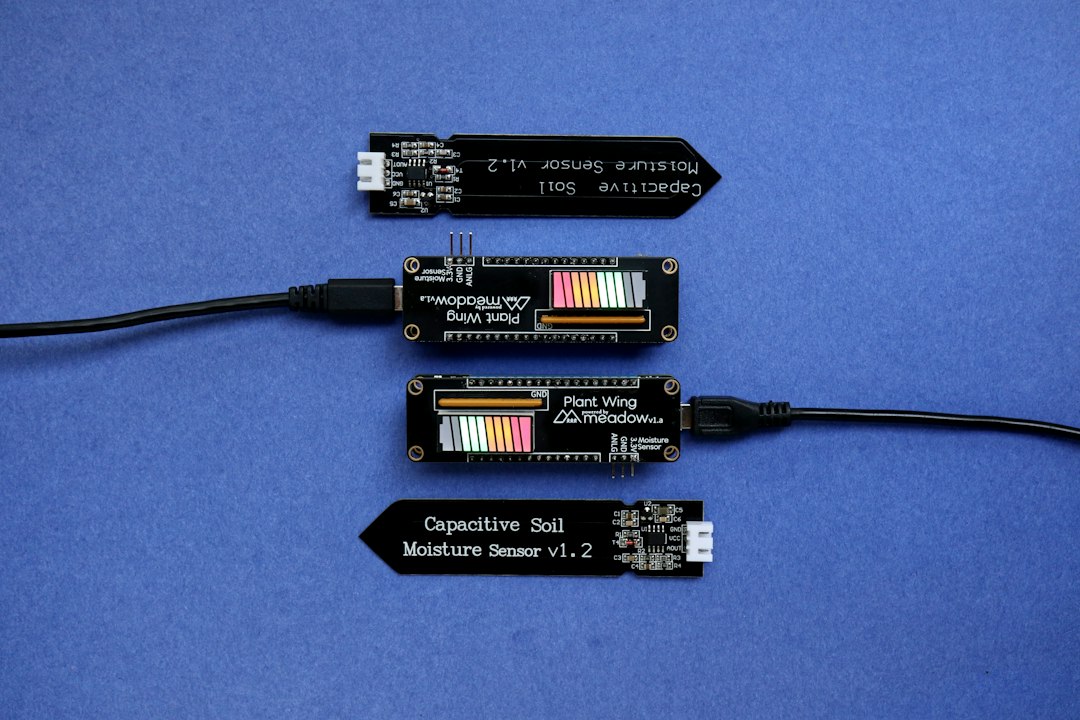
Nine Winsen sensors on one shared breakout design
The range comprises the GM-102B for nitrogen dioxide; GM-202B for ethanol and smoke; GM-302B for alcohol and ethanol; GM-402B for methane and propane; GM-502B for VOCs; GM-512B for compounds associated with breath odour; GM-602B for hydrogen sulphide; GM-702B for carbon monoxide; and GM-802B for ammonia.
All nine use a common board architecture. A regulator supplies the heater voltage required by the selected sensing element, while an ADC101C021 converts its analogue output to a 10-bit reading over I²C. Two Qwiic connectors allow solderless daisy-chaining, and a six-pin 0.1-inch header exposes 3.3V, ground, SDA, SCL, the raw sensor output and the ADC alert signal.
SparkFun assigns a different default address to every variant, spanning 0x50 to 0x5A with gaps. In practice, that means one of each board can share a bus without an I²C multiplexer. Address jumpers provide further options. Makers who need to mix several identical boards should still plan the addresses before soldering.
The Arduino library handles the family differences
SparkFun’s GM-X02B Arduino library supports all nine breakouts. Its examples cover raw ADC readings, clean-air response, alert thresholds, peak tracking and multiple sensors. The code also accounts for an important electrical difference: resistance falls as gas concentration rises on eight sensors, while the GM-102B nitrogen-dioxide part behaves in the opposite direction.
The Qwiic interface simplifies wiring, but it does not establish support in every software stack. SparkFun documents Arduino use; the launch materials do not promise an ESPHome component or direct Home Assistant integration. An ESP32 project outside Arduino would therefore need a compatible driver or custom I²C code. For a different integrated air-quality part with established ESP32 examples, see our BME680 breakout and Arduino guide.
These are development sensors, not safety alarms
The most important limitation is measurement quality. SparkFun says the metal-oxide sensors need a few minutes to warm up and recommends repeating that process after a board has been unpowered for 24–168 hours. A clean-air resistance value, R0, should be measured and stored rather than recalculated blindly at every boot.
Factory curves and nominal detection ranges do not make an individual breakout a calibrated instrument. The sensors can respond to gases other than their headline target, and SparkFun describes the uncalibrated output as qualitative. Converting it into defensible ppm values requires calibration against known gas concentrations. The CO, combustible-gas and other boards should not replace certified alarms or occupational-safety equipment.
Price and availability
SparkFun’s US announcement lists the GM-302B, GM-402B and GM-502B at $10.95; five variants at $11.95; and the GM-512B breath sensor at $13.95. The inspected GM-402B product page showed it in stock at $10.95. Those are US-store prices before any UK delivery charges, VAT or import costs, and availability can change.