RP2040 vs RP2350: Raspberry Pi Pico vs Pico 2 Compared (2026)
RP2040 vs RP2350 and Raspberry Pi Pico vs Pico 2 compared for 2026: CPU, RAM, flash, PIO, ADC, PWM, security, pin compatibility, MicroPython and which board to choose.
Complete Raspberry Pi Pico 2 / RP2350 pinout guide for 2026: safe GPIOs, ADC, I2C, SPI, UART, PWM, PIO, USB, power pins, BOOTSEL, SWD and MicroPython/Arduino setup.
Quick Summary (TL;DR):The ESP32-S31 and ESP32-P4 overlap in HMI, AI, display and camera projects, but they are not really the same class of chip. The S31 is a high-performance connected MCU: dual-core RISC-V up to 320 MHz, 2.4 GHz Wi-Fi…
Quick Summary (TL;DR):The ESP32-S31 is the real next-generation successor to the ESP32-S3, but that does not mean every S3 project should immediately migrate. The S31 moves from dual-core Xtensa LX7 at 240 MHz to dual-core 32-bit RISC-V at up to…

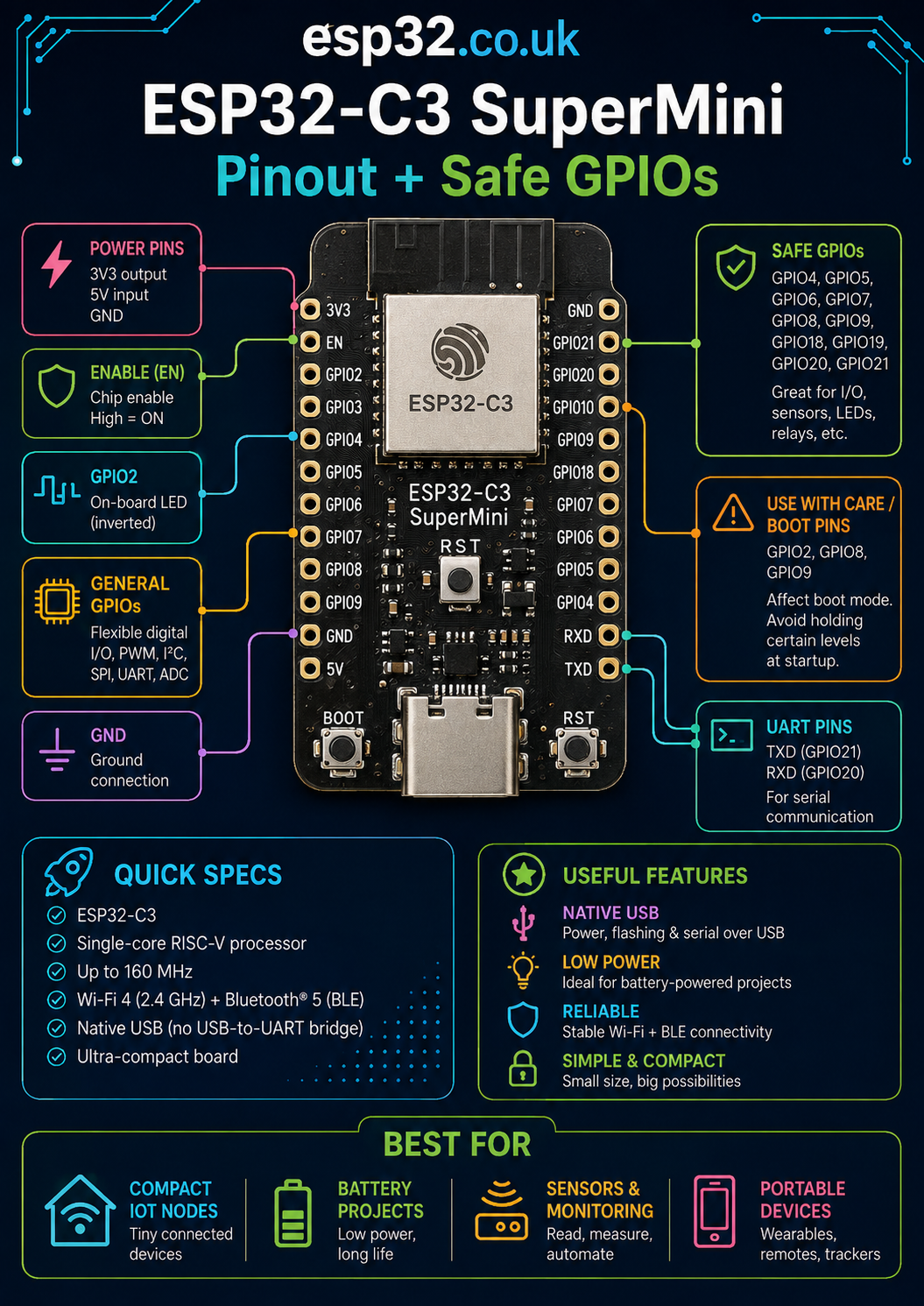
Quick Summary (TL;DR):The ESP32-C3 SuperMini is a tiny third-party ESP32-C3 board built around a 160 MHz single-core RISC-V processor with 2.4 GHz Wi-Fi, Bluetooth LE, native USB and usually 4 MB flash. On the common 16-pin layout, the easiest GPIOs…
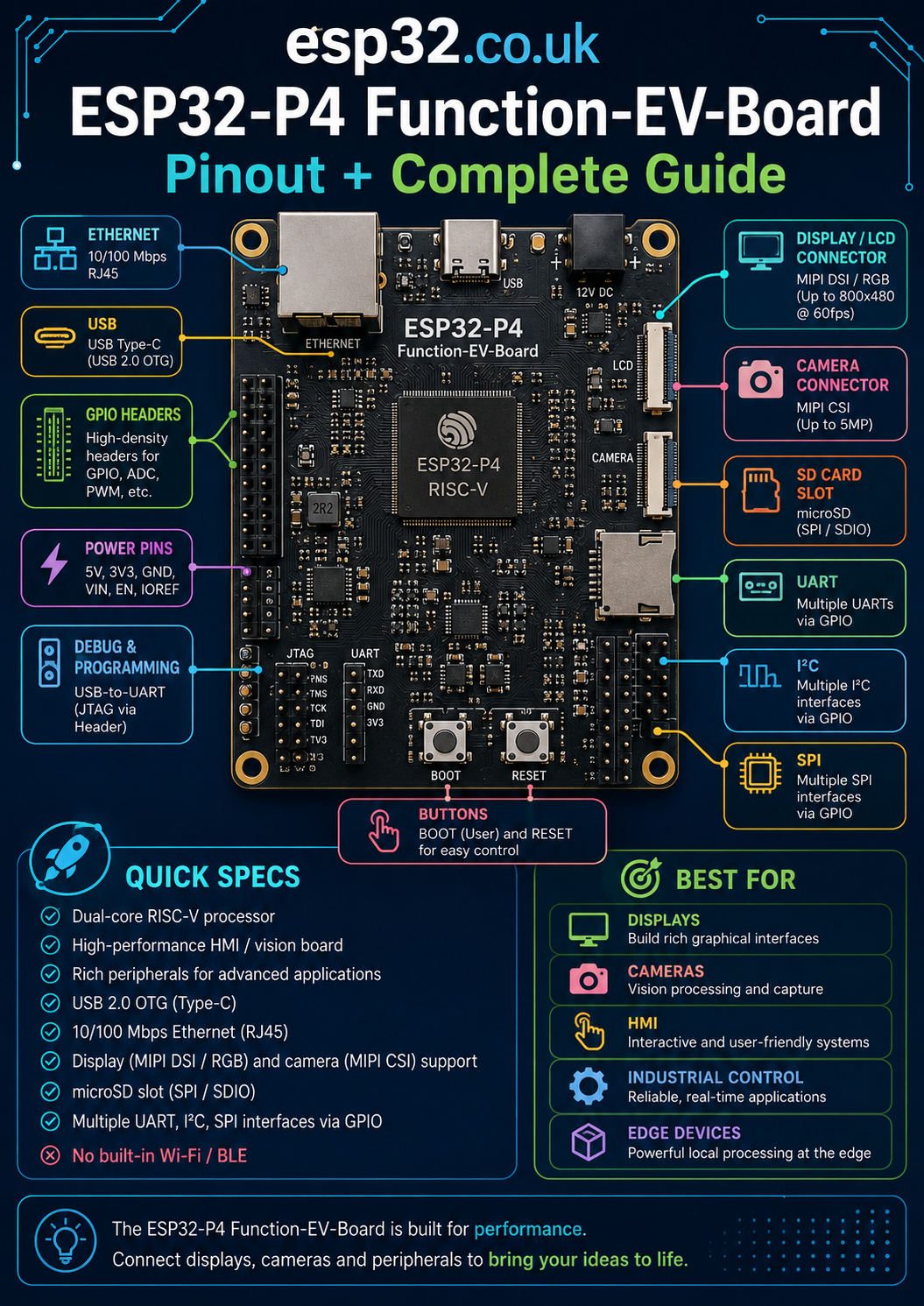
Quick Summary (TL;DR): The ESP32-P4 Function-EV-Board v1.5.2 is not a normal ESP32 DevKit. It is a high-performance multimedia development platform built around the dual-core 400 MHz ESP32-P4 RISC-V processor, with 16 MB flash, 32 MB PSRAM, MIPI CSI camera, MIPI…