ESPressif has officially released ESP-IDF 6.0, and this is one of the biggest framework updates in a while for ESP32AliExpress price developers. The new version brings changes across setup, build tooling, security, Wi-Fi features, release management, and hardware support, but it also introduces some breaking changes that developers should check before upgrading older projects.
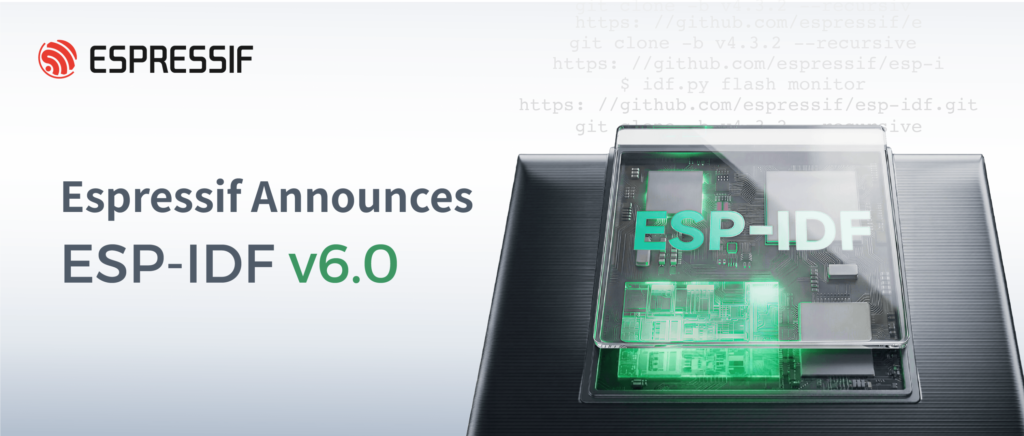
For anyone new to ESP-IDF, one of the most useful improvements is the new ESP-IDF Installation Manager. Espressif describes it as a cross-platform setup tool with both a graphical interface and a CLI, designed to make installation and version management easier on Windows, macOS, and Linux. It also supports offline installation, CI/CD workflows, and automatic prerequisite handling, which should make first-time setup much less painful than before.
Another major change is that PicolibC is now the default C library instead of Newlib. According to Espressif, the goal is lower memory use, reduced binary size, and lower stack consumption for I/O operations, while most applications should continue to work without behavior changes. For embedded developers, that makes this one of the most practical changes in the whole release, even if it is not the flashiest headline.
Security is also getting a major shift in ESP-IDF 6.0. The framework moves to Mbed TLS 4.x and pushes developers toward the PSA Crypto API, which becomes the main interface for cryptographic operations. That is important because applications still relying directly on older mbedtls_* crypto calls may need code changes during migration. Espressif’s migration guide also notes that some legacy crypto APIs have been removed and that early-startup code may need to call psa_crypto_init() explicitly.
On the tooling side, ESP-IDF 6.0 adds several useful improvements. Espressif has introduced Build System v2 as a technical preview, with a more standard CMake-based architecture, and also added a new extension system for idf.py, allowing custom commands to be integrated directly into the normal ESP-IDF workflow. There is also better handling of default values inside sdkconfig, plus support for CMake Presets, which should make it much easier to manage separate development, test, and production build configurations.
ESP-IDF 6.0 also adds some notable connectivity features. One of the more interesting additions is support for Wi-Fi Aware Unsynchronized Service Discovery (USD), which allows proximity-based service discovery without an access point and without cluster synchronization. Espressif says one of the key use cases is Wi-Fi-based commissioning for Matter devices, which makes this especially relevant for smart home and IoT projects. The release also adds a new WPA3 compatible mode to help devices serve both WPA2 and WPA3 clients more cleanly during migration.
For deployed products, Espressif is also addressing a long-standing pain point with safer bootloader OTA updates. In ESP-IDF 6.0, recovery bootloader support is introduced for ESP32-C5 and ESP32-C61, allowing the ROM bootloader to fall back to a recovery partition if a bootloader update fails. That should reduce the risk of bricking devices during remote updates, at least on supported chips.
Another welcome improvement is that Espressif is now publishing release notes through a new release notes database, which makes it easier to compare versions and see what changed between releases. That may sound small, but for developers deciding whether to move a mature project from v5.x to v6.0, it is actually a very useful improvement.
Hardware support has expanded too. Espressif says ESP32-C5AliExpress price and ESP32-C61 have now graduated to full support, while ESP32-H21 and ESP32-H4 are included with preview support in ESP-IDF 6.0.
The part developers need to pay close attention to is the breaking changes. Espressif says ESP-IDF 6.0 removes several legacy drivers, including ADC, DAC, I2S, Timer Group, PCNT, MCPWM, RMT, and Temperature Sensor legacy drivers. Compiler warnings are now treated as errors by default, some components have moved to the ESP Component Registry, and the crypto transition away from legacy Mbed TLS APIs may require real code changes in older projects. On top of that, ESP-IDF v6 raises the minimum supported CMake version to 3.22.1 and uses esp-idf-kconfig v3, which brings syntax changes in configuration files.
The bottom line is simple: ESP-IDF 6.0 is a significant release, not just a routine version bump. For new projects, it looks like a strong foundation with better tooling, cleaner security architecture, and more modern build options. For existing projects, though, this is the sort of update where reading the migration guide first is not optional.
A final detail worth watching is the wider ecosystem. Espressif’s Arduino roadmap currently shows Arduino-ESP32PriceAliExpress price 4.0 targeting May 2, 2026 and based on ESP-IDF 6.0, so this release is likely to shape much more than just native ESP-IDF projects over the next few months.
ESP-IDF v6.0 is now available on Espressif’s GitHub