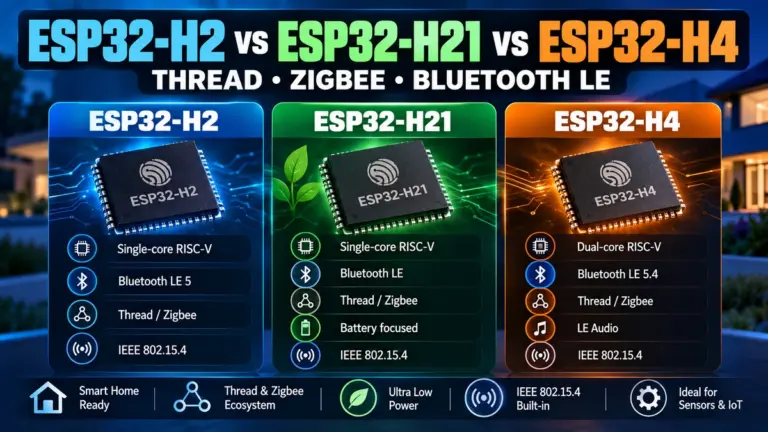
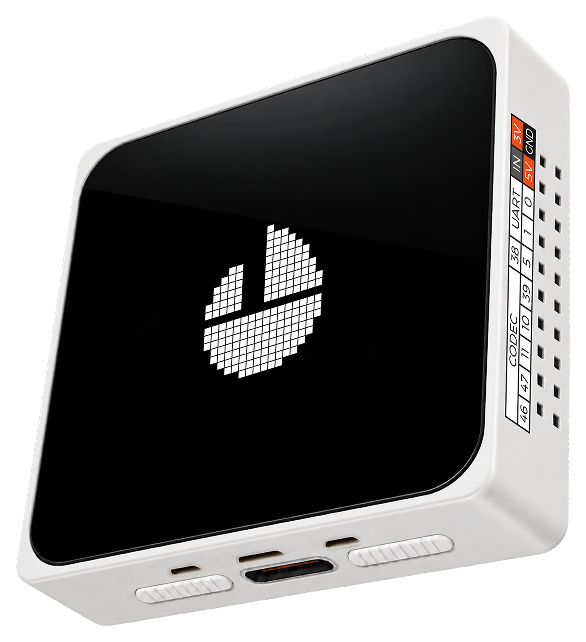
Espressif has announced the ESP32-H21, a new low-power wireless SoC designed for Thread, Matter, Zigbee, and Bluetooth Low Energy devices. The company published the announcement on March 3, 2026, positioning the chip as an enhanced option for battery-sensitive IoT products.
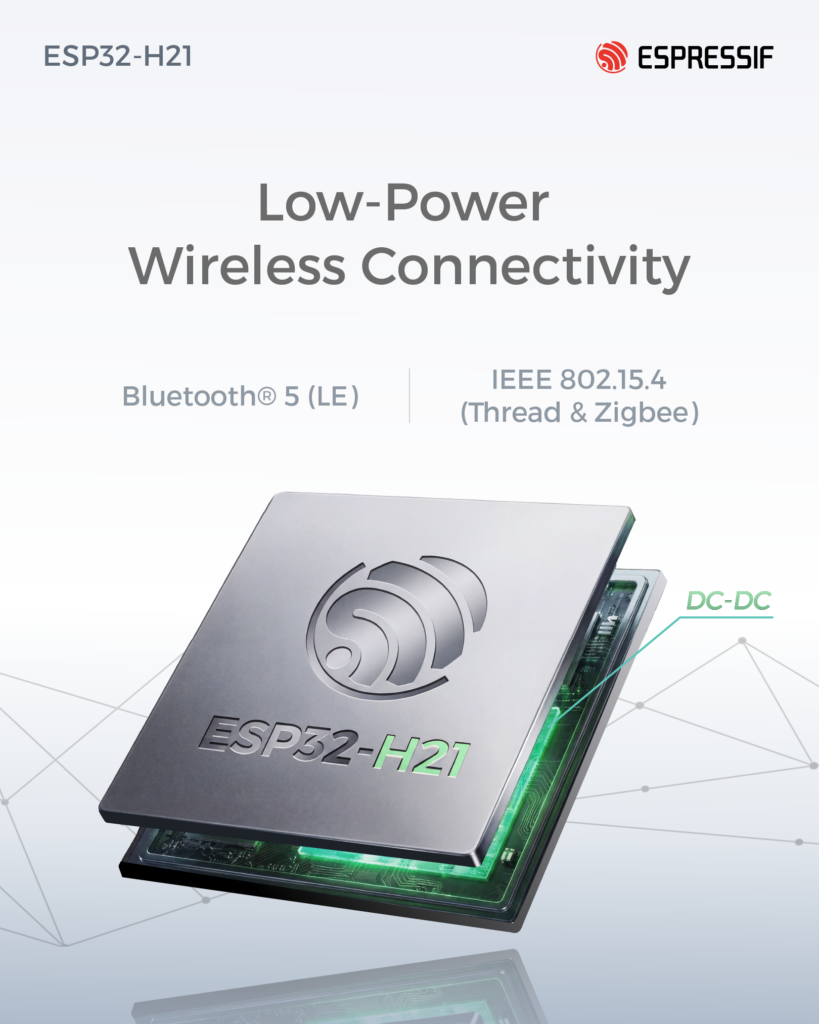
The main point of the ESP32-H21 is simple: it is an incremental update to the ESP32-H2AliExpress price that adds an on-chip DC-DC converter to reduce active current consumption and improve battery life. That sounds like a small hardware change, but for always-connected sensors and low-power mesh nodes, it is exactly the sort of improvement that matters in the real world.
Espressif says the chip is aimed at products such as smart-home and building automation sensors, Bluetooth mesh nodes, lighting and control devices, Matter-enabled endpoints, occupancy and environmental sensors, and other always-connected, battery-powered products. So this is not a flashy multimedia ESP32PriceAliExpress price chip. It is a more focused part meant for devices that need to stay online for a long time without wasting power.
On the wireless side, the ESP32-H21 combines IEEE 802.15.4 and Bluetooth LE, making it a natural fit for low-power mesh networking. That gives it the right radio mix for Thread and Zigbee on one side, and Bluetooth-based commissioning, control, or local connectivity on the other.
The power figures are where this chip becomes genuinely interesting. Espressif says that with the integrated DC-DC converter, the RX active current is around 8.2 mA under typical operating conditions. It also says the chip can reach as low as 9 µA in light sleep and 5 µA in deep sleep. Those numbers make it clear that the H21 is meant for serious low-power duty-cycled designs, not just generic wireless gadgets.
Espressif also says the ESP32-H21 supports up to 20 dBm transmit power, which should help with wireless range and link robustness in Thread and Bluetooth LE networks, especially in denser or noisier environments. That is a useful detail because low-power chips often end up being judged not just on sleep current, but on whether they can still hold a stable link when conditions are not ideal.
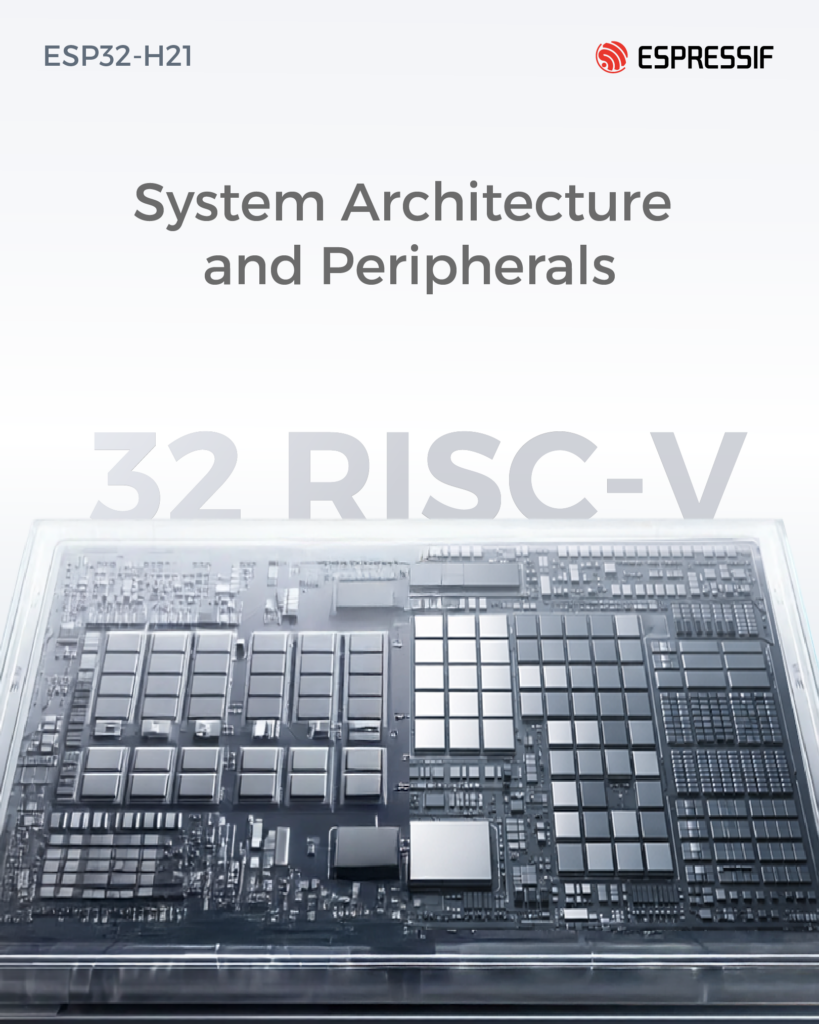
Under the hood, the ESP32-H21 is built around a 32-bit RISC-V microcontroller running at up to 96 MHz. Espressif says it includes 320 KB SRAM, 128 KB ROM, and support for external flash memory, which should be enough for a wide range of compact endpoint devices and protocol-heavy sensor applications.
The chip also keeps a useful peripheral set for its class. Espressif lists up to 19 GPIOs along with interfaces such as UART, SPI, I2C, I2S, PWM, ADC, timers, and DMA. In practice, that means the H21 should be flexible enough for sensor hubs, controllers, small actuators, and low-power user-interface devices without needing much extra glue logic.
On the software side, Espressif says the ESP32-H21 is fully supported by ESP-IDF, is compatible with ESP-Matter for battery-powered Matter devices over Thread, and also supports development of Zigbee-based devices with product-ready examples. The company also says it can be used for standard Bluetooth LE use cases and for building ESP-BLE-MESH networking systems for lighting control, sensor networks, building automation, and industrial environments.
The blunt takeaway is that the ESP32-H21 looks like a practical, sensible addition to the ESP32AliExpress price family. It is not trying to be the most powerful or the most feature-packed chip. It is trying to be better at low-power Thread and Bluetooth LE work, and the addition of the integrated DC-DC converter suggests Espressif is refining its lineup for more serious battery-powered deployments rather than just launching new part numbers for the sake of it.