ESP32-S31 – A Big Step Up for Smart Devices and Rich HMI Projects
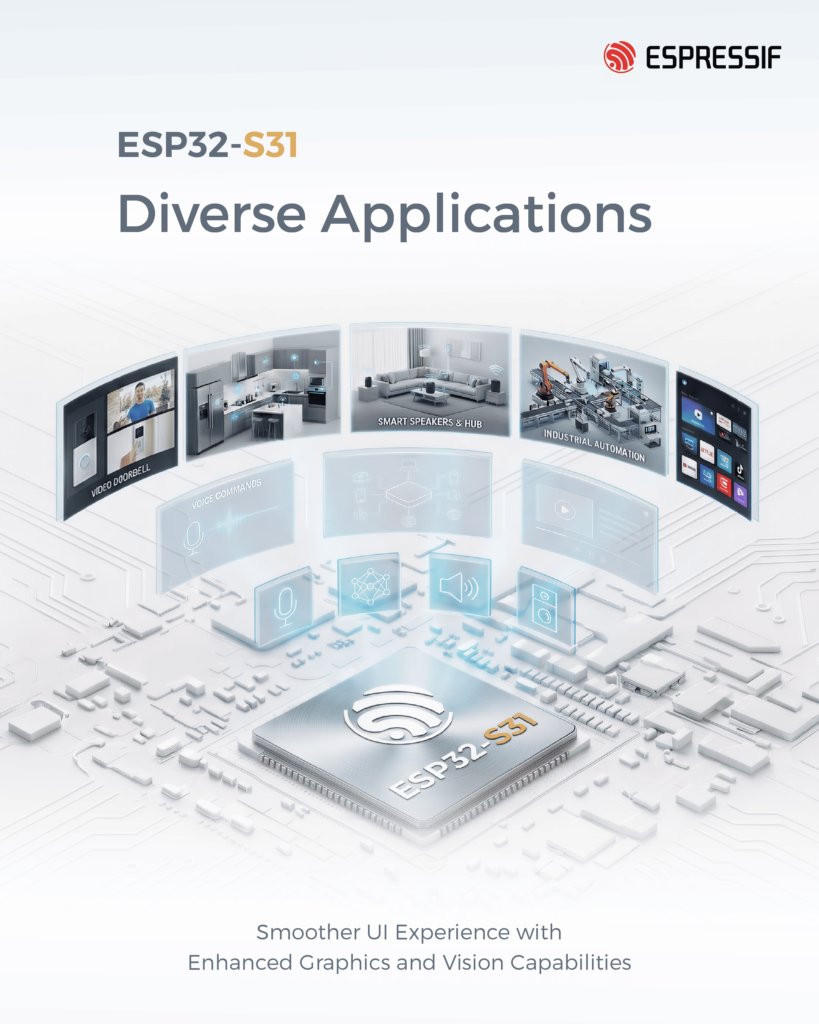
Espressif has announced the ESP32-S31AliExpress price, a new high-performance SoC aimed at advanced IoT products that need much more than basic Wi-Fi and Bluetooth. The company published the announcement on March 26, 2026, describing the chip as a dual-core RISC-V design built for applications such as smart appliances, smart speakers, voice-controlled devices, smart home hubs, industrial automation systems, and other multimedia IoT products.
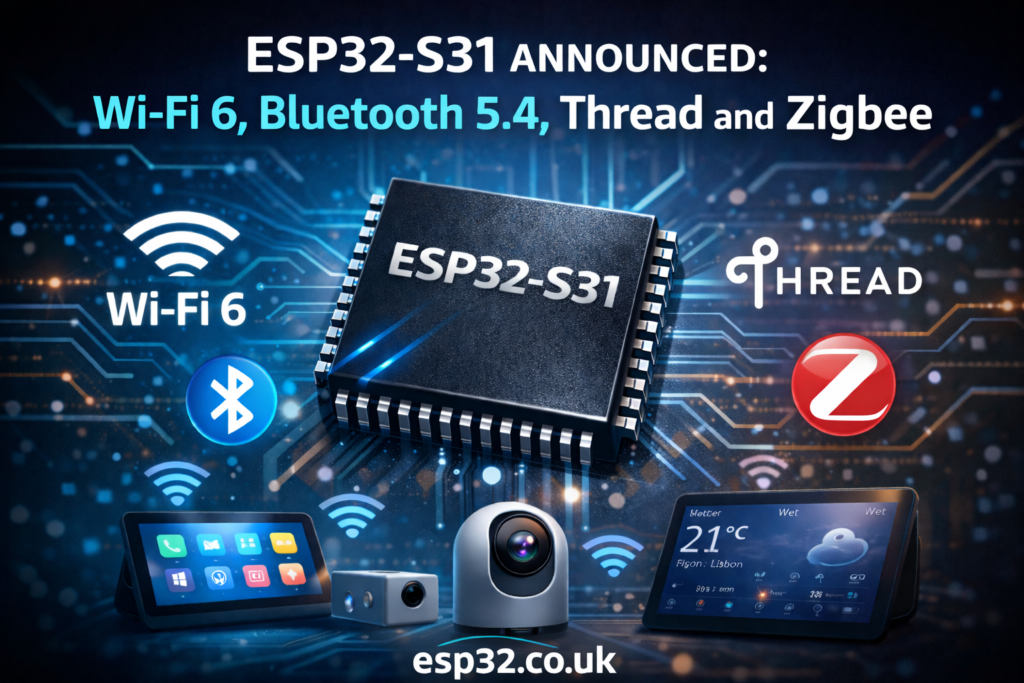
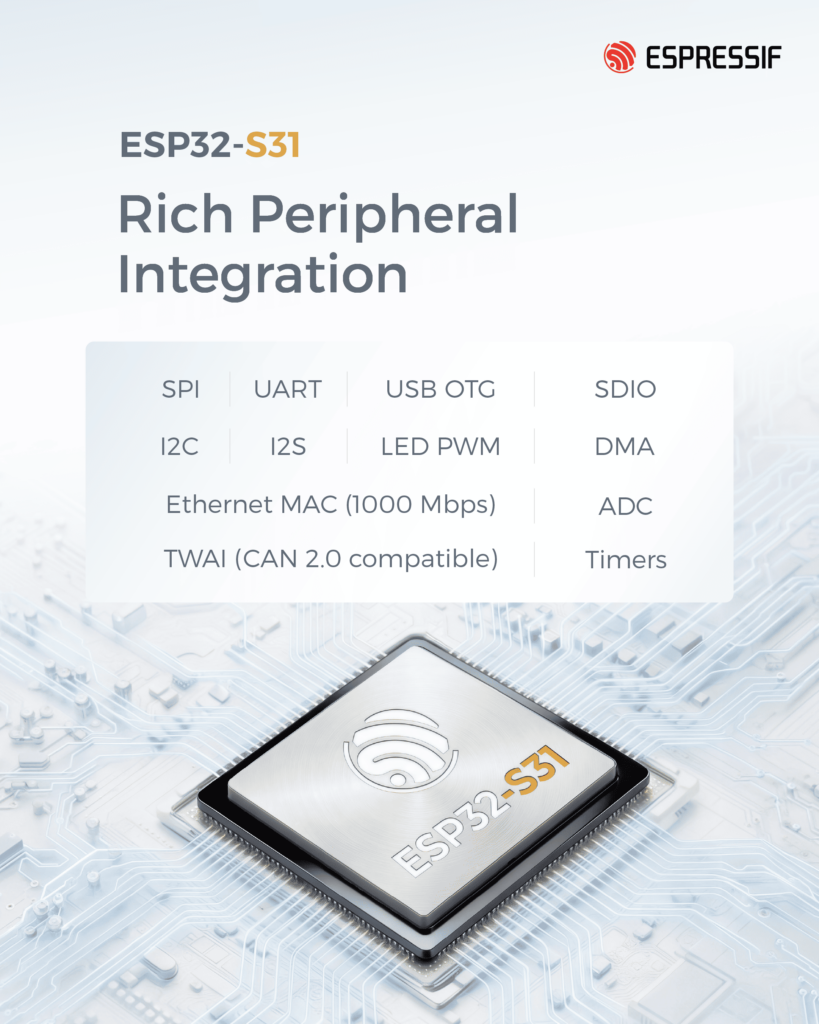
What makes the ESP32-S31AliExpress price immediately interesting is how much connectivity Espressif has packed into one chip. It combines 2.4 GHz Wi-Fi 6, Bluetooth 5.4, Bluetooth Classic, and IEEE 802.15.4 for Thread and Zigbee, while also supporting Matter over both Wi-Fi and Thread. On top of that, Espressif says it includes an integrated 1000 Mbps Ethernet MAC, which gives it both wireless and wired networking options for more demanding products.
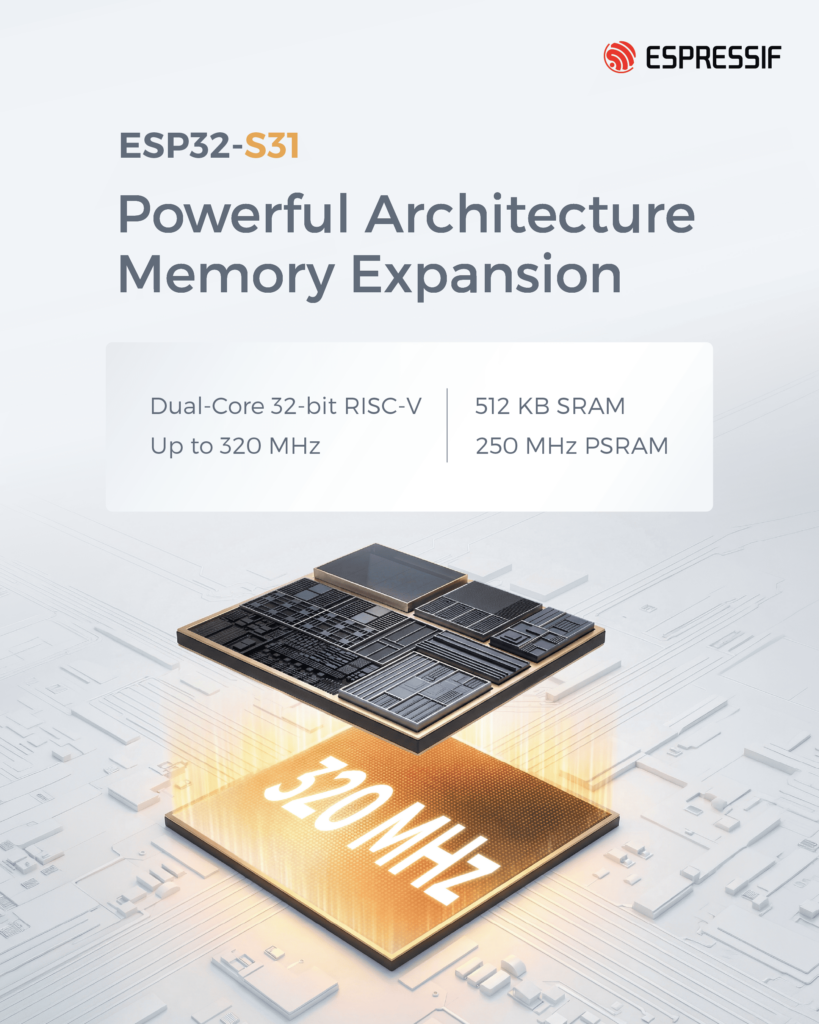
That already puts it in a very different category from the simpler ESP32AliExpress price parts most people know. According to Espressif, the ESP32-S31 uses a dual-core 32-bit RISC-V MCU running at up to 320 MHz, includes 60 GPIOs, 512 KB SRAM, and support for 250 MHz 8-bit DDR PSRAM with simultaneous flash and PSRAM access. One of the cores also has a 128-bit data path with SIMD instructions, which is the kind of spec that suggests Espressif is pushing this chip toward heavier edge processing, not just sensor reading and MQTT traffic.
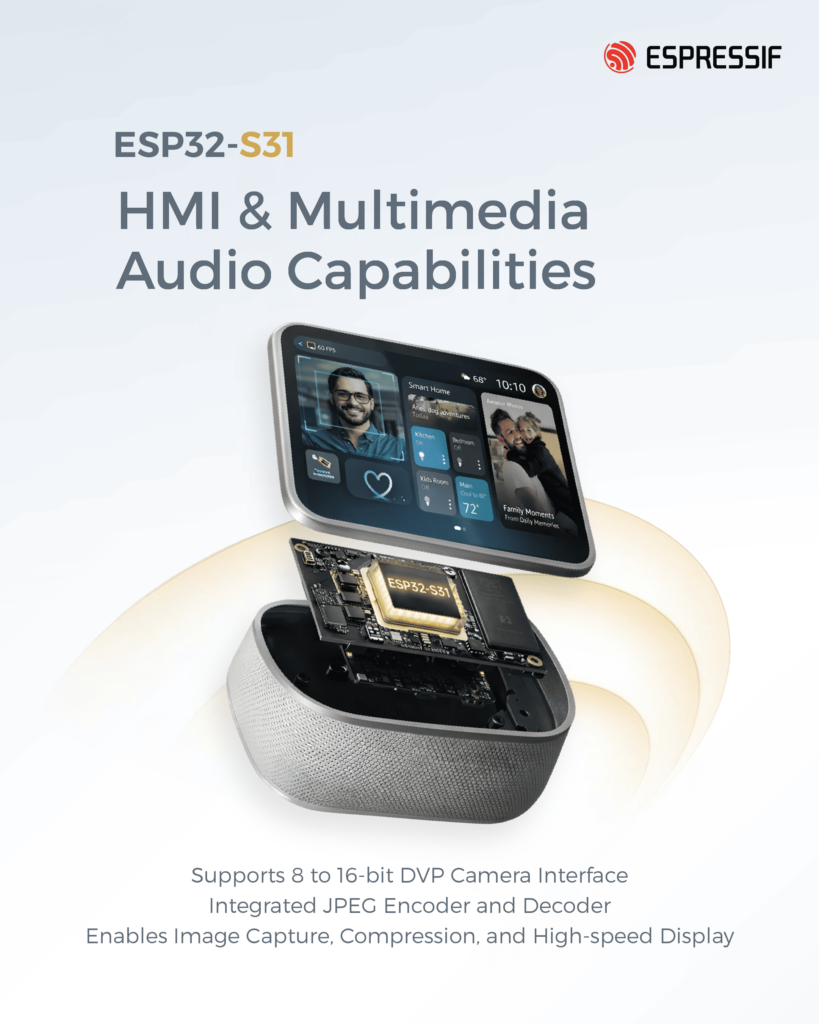
The other big angle is multimedia and HMI. Espressif says the ESP32-S31 includes a DVP camera interface, broad LCD support for parallel displays, hardware color space conversion, JPEG codec, PPA, 2D-DMA, and up to 14 capacitive touch channels. In plain English, this looks much more like a chip for smart displays, video doorbells, multimedia control panels, and voice-interface devices than a typical low-cost ESP board for simple automation tasks.
Audio is another area where the ESP32-S31 looks unusually strong. Espressif says it supports Bluetooth 5.4 LE Audio with the LC3 codec and multi-stream audio, while also keeping Bluetooth Classic for compatibility with older headphones, speakers, and automotive systems. It also includes dual I2S controllers with hardware-level Bluetooth audio synchronization to reduce latency and avoid the usual software timing mess.
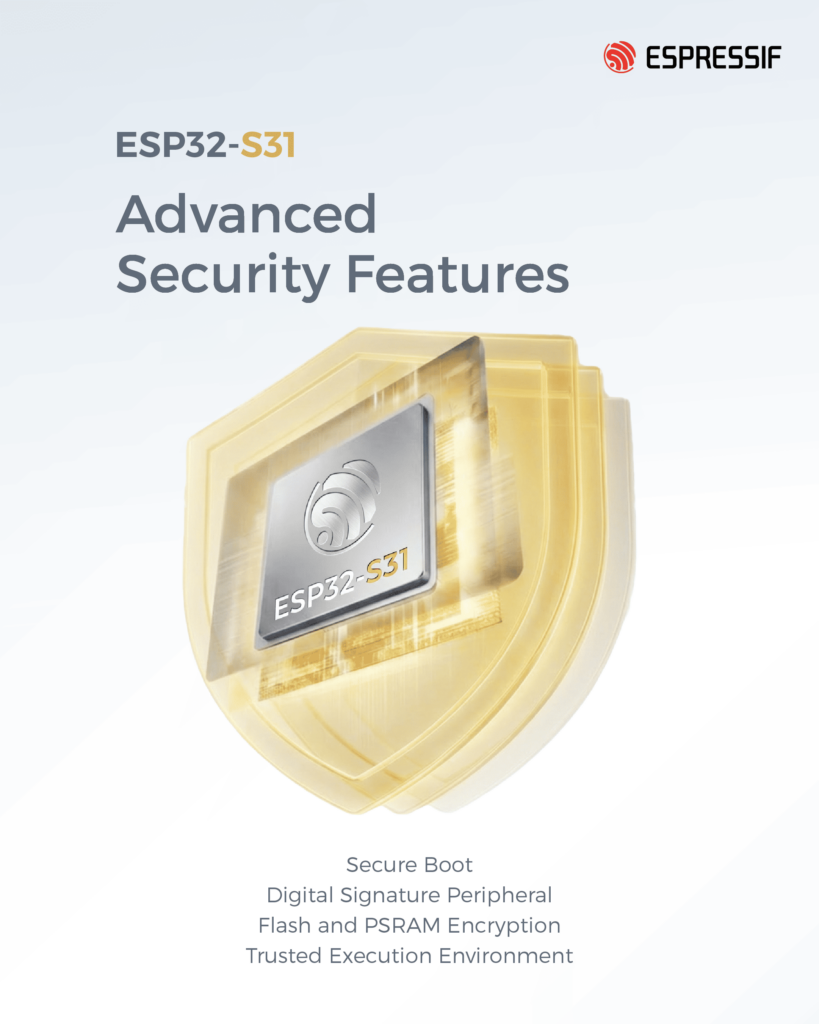
Security is clearly a major selling point too. Espressif says the chip includes TRNG, RAM-based PUF, secure boot, flash and PSRAM encryption, and hardware crypto acceleration for AES-128/256, RSA, ECDSA, and ECC. The company also highlights an ECDSA-based digital signature peripheral, plus TEE and APM for software isolation in multi-application deployments. That is a much more serious security story than the older “cheap Wi-Fi microcontroller” image many people still associate with the ESP32 family.
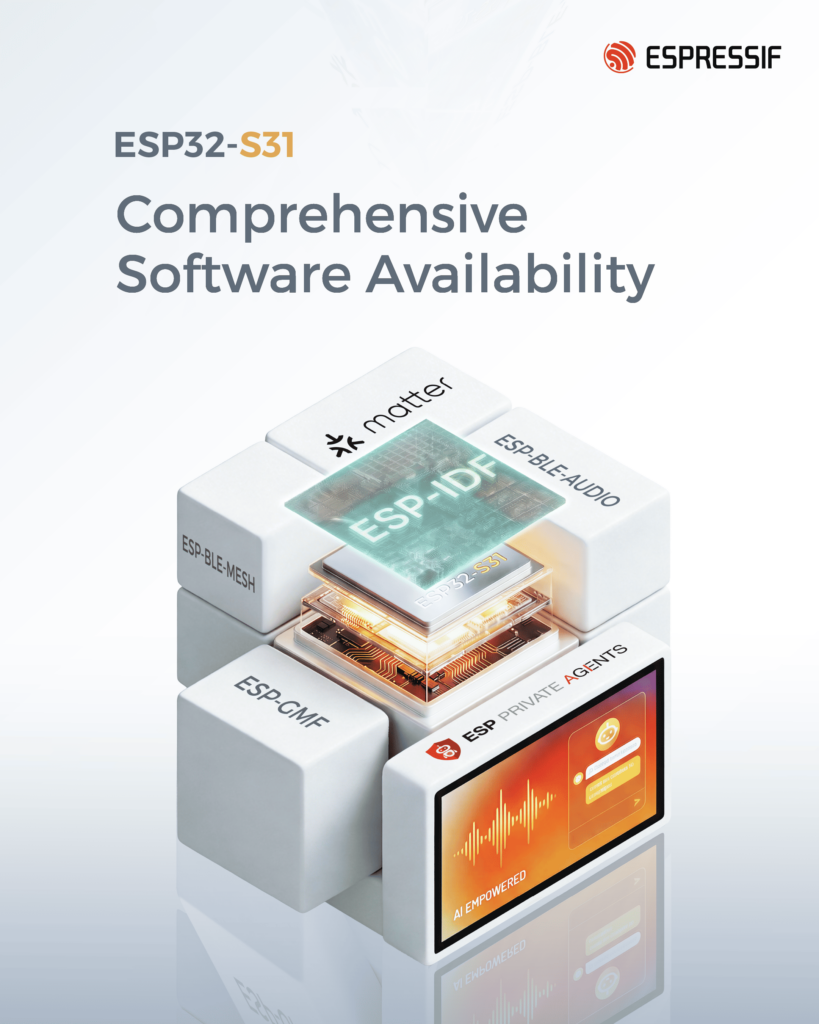
From a software perspective, Espressif says the ESP32-S31 will be supported by ESP-IDF, ESP-Matter, ESP-BLE-AUDIO, and ESP-GMF, and it will also work with ESP-Hosted and ESP-AT as a connectivity co-processor. Espressif is also positioning it for AI-enabled client devices, including voice-enabled products that interact with AI agents and LLM-based services.
The blunt takeaway is that the ESP32-S31 looks like one of the most ambitious ESP32-family chips so far. It is not just a small upgrade over the S3. On paper, it pushes into a much richer class of devices: smart home hubs, smart displays, voice products, multimedia panels, LE Audio gear, and industrial HMI systems. For readers of esp32.co.uk, this is exactly the kind of launch worth watching because it shows where Espressif seems to be heading next: fewer compromises, more connectivity, more multimedia, and much more capable smart-device platforms.